Feature stories/news

Local Interest
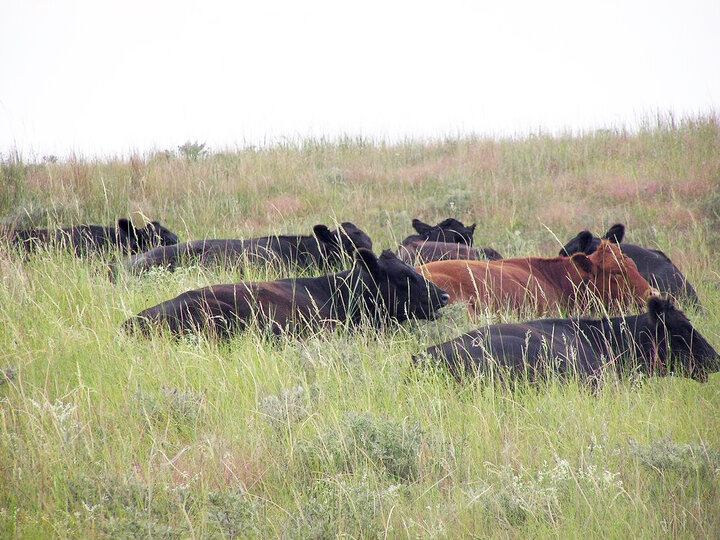
Webinar Series to Focus on Range and Pasture Management
Nebraska Extension will host a six-part webinar series entitled “Knowing, Growing and Grazing Grass,” beginning Thursday, Oct. 12 at 6:30 p.m. MT. The webinar series will assist landowners and livestock producers in better understanding how to identify, grow and manage grasses in pastures and rangelands.
“This series will give producers a solid foundation in range and pasture management,” said Aaron Berger, Nebraska Extension educator and program coordinator. Throughout the course, the impacts of drought will be discussed.
Topics will include plant identification, management practices, calculating stocking rates, using tools like USDA Web Soil Survey and Rangeland Analysis Platform, and developing grazing plans and managing drought risk through Pasture, Rangeland and Forage (PRF) insurance.
Participants are invited to submit plant photos for identification. All webinars will be interactive and recorded for later viewing.
The series will run Monday and Thursday evenings, Oct. 12 through Oct. 29 from 7:30 to 8:45 p.m. CT (6:30 to 7:45 p.m. MT). Two optional sessions will also be held on Oct. 20 and 27. The course is limited to 30 participants.
The registration fee is $100 per person and includes a copy of "Grassland Plants of South Dakota and the Northern Great Plains" and a printed resource notebook featuring Nebraska Extension NebGuides and Circulars. Register by Thursday, Oct. 1, as materials will be mailed ahead of the course.
To register, visit: https://go.unl.edu/knowing_grass.
For more information, contact Aaron Berger at 308-235-3122 or aberger2@unl.edu.

AI research focuses on optimizing herd growth
By Chabella Guzman | PREEC Communications
Expanding a cattle herd can be costly, particularly when developing replacement heifers.
A research project at the UNL Panhandle Research, Extension, and Education Center Research Feedlot is exploring the AI breeding efficacy of using either fresh or frozen semen and single or multiple sires within the same straw.
Rick Funston, Nebraska Extension Beef Reproductive Specialist, is collaborating with Bryan Palm, Owner and Manager of 2Bar Ranches, on the project. Artificial insemination (AI) pregnancy rates in beef heifers can vary substantially. Even with good reproductive management and estrus synchronization, conception may fail.
“Previous research suggests that using multi-sire semen may increase pregnancy rates by roughly 9 to 11.5 percent, potentially because combining sperm from multiple bulls could improve overall semen quality,” Funston said.
Palm, who currently leases the UNL Research Feedlot, uses the facility to develop heifers for their cowherd.
“Our biggest concern right now is to breed as many heifers as we possibly can. We're trying to build our cowherd substantially,” Palm said. “I mean, we have a closed herd, so every percentage rate we can get better in our AI is money ahead for us.”
The study investigates whether multi-sire semen, which includes semen from three bulls, can improve pregnancy rates in beef heifers compared with single-sire semen, and whether fresh semen performs better than frozen semen. Research comparing fresh versus frozen semen has produced mixed results, so the study also tests whether the semen storage method affects fertility.
“We’re hypothesizing that fresh semen from three bulls mixed together will produce higher AI pregnancy rates than semen from a single bull in beef heifers,” Funston said.
The project has 339 Angus heifers and three unrelated Angus bulls at the feedyard leased by Palm. Plus, 534 Angus crossbred heifers with one Simmental bull and two unrelated Angus bulls at the Kelly ranches north of Sutherland, Neb.
“There was a lot of logistics getting the fresh semen to the heifers. You know, when using frozen, it can be there months before you need it,” Palm said. “With the fresh, they got to collect it and get it to you in 48 hours.”
The research project is in its first of three years, and there have already been some positive results. In 2026, Palm and Funston have seen bred heifers on fresh pooled semen up by almost 11 percent. After the calves are weaned next year. They will go into Palm’s feed yard, where their DNA will be tested for direct parentage to show which bulls contributed the most to animal reproduction.
Funston expects fresh multi-sire semen to have the highest fertility, potentially because combining sperm from multiple bulls increases the likelihood that viable, fertile sperm will be present at ovulation. This research provides a real-world evaluation of applied AI management practices that will inform opportunities for developing heifers in the western Great Plains.

Upcoming ServSafe® Food Safety Trainings available across the Nebraska Panhandle
Nebraska Extension is continuing to offer ServSafe® Food Safety training across the Nebraska Panhandle in 2026, with several upcoming opportunities still available for food service managers and employees to become certified or renew their knowledge.
These nationally recognized training courses are designed to help restaurants, food trucks, schools, and other food establishments strengthen food safety practices, reduce the risk of foodborne illness, and meet Nebraska certification expectations. With increased emphasis on food safety through updated state regulations aligned with the Nebraska Pure Food Act, having trained and certified staff remains a critical component of safe and successful food service operations.
“ServSafe training helps food establishments build confidence, protect customers, and support consistent, safe operations,” said Ashley Fenning, Nebraska Extension. “We encourage businesses to take advantage of these remaining training opportunities to ensure their staff is prepared and compliant.”
The ServSafe® Food Protection Manager course is a comprehensive, one-day training intended for food establishment owners, managers, and supervisors responsible for overseeing food safety. This course covers essential topics including preventing contamination, time and temperature control, employee health and hygiene, and effective cleaning and sanitation systems. Participants will also learn how to implement safe food-handling procedures throughout the food flow, from purchasing to service. The training includes the course manual, eight hours of instruction, and a proctored ServSafe Food Protection Manager certification exam, allowing participants to complete certification in one session.
Upcoming ServSafe Food Protection Manager Trainings:
- Oct. 6 - from 9 a.m. to 6 p.m. at the Box Butte County Extension Office in Alliance
- Nov. 3 - from 8 a.m. to 4 p.m. at the Panhandle Research, Extension & Education Center in Scottsbluff
The ServSafe® Food Handler training is a shorter, half-day course designed for employees who handle or prepare food. This training provides practical, easy-to-understand instruction focused on everyday food safety practices. Participants will learn about personal hygiene, prevention of cross-contamination, allergen awareness, time and temperature control, and proper cleaning and sanitation procedures. Each session also includes a proctored ServSafe Food Handler test, allowing participants to complete both training and certification during the course.
All upcoming ServSafe Food Handler Trainings will be held from 9 a.m. to 1 p.m.
- Dec. 1 - Prairie Winds Community Center in Bridgeport
The cost for the ServSafe Food Protection Manager training is $160 per participant, and the ServSafe Food Handler training is $40 per participant, which includes instruction, materials, and the proctored exam. Registration is required three weeks prior to each course date to allow time for materials to be prepared and mailed.
Participants can register online at https://go.unl.edu/panhandleservsafe2026 or by calling the Morrill County Extension Office at 308-262-1022.
For additional information, contact Ashley Fenning, at 308-262-1022 or astevens4@unl.edu


