ADDITIONAL LIVESTOCK OPPORTUNITIES
LIVESTOCK BONUS AUCTION
The Market Livestock Bonus Auction is a tradition of County Fairs across the Nation. It is an established reward system honoring young people for the efforts they made to grow and show quality livestock. Through their efforts they have learned leadership, agricultural skills, and the value of hard work. Since no animals are actually sold in this auction the term “bonus” is used to denote a cash award given by members of our community to these hard-working youth.
- Exhibitors will be limited to sell only one (1) market animal in the auction in order to cut the number of animals down to a minimum and save time. Animals exhibited in breeding classes will not be allowed.
- Exhibitors who want to participate in the bonus auction must sign up at the 4-H Office by 6:00 pm on Thursday. Exhibitors will consign the highest placing animal in the species of their choice. NO LATE ENTRIES WILL BE ACCEPTED. The Committee members reserve the right to refuse late or incomplete entries.
- Exhibitors are required to bring a small "thank you" gift for buyers at the time they sign up for the auction.
- Exhibitors will be instructed to be at the designated photo area following the conclusion of the auction. Exhibitors are expected to wait in the photo area with their auction animal for buyer photos. 4H/FFA attire is required for photos.
- All auction participants must present the buyer with a thank you gift during photos. Once exhibitors receive their photo with their buyer, they need to send the photo and thank you note to their buyer(s).
The public is invited to participate in the rewarding of Holt County 4H and FFA Members.
Sale order sheet will be provided to the public attending the sale.
Animals will sell by dollar ($) amounts, not price per pound.
The only individuals in the ring during the sale will be the auction committee members, the auctioneer, the ring persons (set by the auction committee), and the exhibitor. All buyers will be placed on the outside of the ring for their protection.
Eligible Livestock for Market Bonus Auction:
- Market Steers and Market Heifers
- Second Year Bucket Calves (must be a market animal)
- Market Lambs (minimum weight – 100 lbs.)
- Market Swine (minimum weight – 220 lbs.)
- Meat Goats (minimum weight – 50 lbs.)
For more information or questions please contact a member of the Livestock Bonus Auction Committee.
| Tyler Butterfield - Chairman | James and Katie Olson |
| Bill and Carmen Lechtenberg - Secretary | Justin and Megan Ramm |
| Shawna Mitchell - Treasurer | Barry Pospichl |
ROUND ROBIN SHOWMANSHIP
Superintendents: Shawna Mitchell, Christy Deseive, and Amber Shane
- The following awards may be awarded in this division - Grand and Reserve Grand Champion Intermediate and Grand and Reserve Grand Senior Round Robin Showman.
- Grand and Reserve Grand Champion Intermediate and Senior Showman of Beef, Sheep, Meat Goat and Swine Showmanship will be invited to participate in the Round Robin Showmanship Contest.
- Round Robin invites must be accepted or declined to a Round Robin superintendent by 5:00pm on Friday. This will allow the opportunity to be given to the next showman in line, if applicable.
- All 4-H/FFA members are eligible to exhibit their animal in their project species and can be declared a showmanship winner in more than one species area. Members will advance to the Round Robin in the first species they are named champions. To ensure that all species are represented, livestock superintendents will work together to fill all spots. If a member wins in more than one species, the order of advancement to the Round Robin will be based on the order of judges' rankings.
- All participants for each species will receive a score on the species they are representing; however, this will only be used in an unbreakable tie. Each show person will be judged using a 20-point system on each of the other three species.
- A tie will be broken by throwing out the highest and the lowest scores. If there is still a tie, the 4-H’er with the lowest single score will lose the tie.
- Winners will be announced immediately following the competition.
- Participants are encouraged to learn from and practice with other exhibitors throughout the week to prepare to show each specie during the Round Robin Competition.
- The Intermediate and Senior Round Robin showmanship contests will be held simultaneously. Each participant will have 3-4 minutes to show each species involved.
- Fitting is not allowed and will not be judged, but animals must be clean and well presented.
- Participants will wear 4-H/FFA Official dress.
- Once a senior showman has been named Grand Champion Round Robin Showman twice, they are no longer eligible.
RATE OF GAIN CONTEST
All market beef and second-year bucket calves must be weighed and identified using the appropriate ID affidavit form, which must be submitted to the Extension Office by April 1. The recorded weight will serve as the animal’s beginning weight. Final weights will be taken on entry day of the Holt County Fair, and average daily gain will be calculated based on the beginning and final weights. To be eligible for prizes, animals must be exhibited at the fair.
Prizes will be awarded for 1st, 2nd, and 3rd place, and the Fair Board will oversee the Rate of Gain Contest.
LIVESTOCK JUDGING CONTEST
DIVISION 500 LIVESTOCK JUDGING CONTEST CLASSES
(4-H Age prior to Jan. 1 of current year)
This Contest will be held during the County Fair.
CF-F500906 - Junior (8-10)
CF-F500907 - Intermediate (11-13)
CF-F500908 - Senior (14 & Older)
LIVESTOCK/ANIMALS
HOLT COUNTY 4-H/FFA LIVESTOCK/ANIMALS RULES
DRESS CODE - Please follow the dress code as noted in the “General Rules and Regulations” section of this fair book.
EXHIBITOR COMPLIANCE -Exhibitors must cooperate with all Holt County Fair officials and follow the Holt/Boyd County Regulations Book and the IAFE National Show Ring Code of Ethics.
OWNERSHIP OF ANIMALS - The same animal(s) can be exhibited by more than one exhibitor only IF the exhibitors live in the same household and one exhibitor is Clover Kid age and one exhibitor is 4-H Age. Both exhibitors must have properly identified the animal(s) on the appropriate form and by the appropriate deadline. The reason why it is acceptable for a Clover Kid and a 4-H exhibitor to show the same animal is that the clover kid program is non-competitive and is a show and tell show. All animals being exhibited in the 4-H/FFA Shows must be owned by the exhibitor by June 15.
IDENTIFICATION – Please refer to specific animal species for animal identification requirements.
YOUTH FOR THE QUALITY CARE OF ANIMALS (YQCA) -Nebraska 4-H requires all youth (except Clover Kids) enrolled in any beef, dairy cattle, dairy goats, meat goats, poultry, rabbits, sheep, or swine projects must complete Annual quality assurance training through Youth for the Quality Care of Animals (YQCA) to show at Holt County Fair. FFA members who have completed a high school agriculture education program during the school year will be certified if/when their FFA advisor contacts the county extension office and validates the completion of the quality assurance training requirements.
STALLING AT THE FAIR GROUNDS – Animals that are NOT required to stall on the fairgrounds are: Cats, Dogs, Small Animals, and Horses. All other animals are REQUIRED to be stalled on the fairgrounds (refer to fair schedule for check-in and release times).
To allow exhibitors to be able to show more animals at the fair stalling may be tight/limited. Please think about animals that need to be separated and bring your own panels/barriers that you may want to use in your stall(s). The superintendents will do the best that they can, but this also might mean that you may not get a stall for tack.
4-H/FFA livestock members are required to clean all their stalls, pens, and cages. All manure must be placed in the manure spreaders furnished on the grounds. The Fair Board will not furnish any hay; sand is optional and will be provided for bedding. If sand is used as bedding, it must be removed from stalls and put back in original pile when cleaning up before leaving the fair. All exhibit areas must be kept clean at all times. Any exhibit that is not properly cared for can be dismissed by management or premiums may be withheld. All feed, water and other required care is to be provided by the exhibitor. Leaders/Parents are responsible to see that their members/children follow these requirements. Failure to do so will result in withholding of premium money. Each exhibitor needs to check out with the appropriate Superintendent when exhibits are leaving the grounds. All of the above requirements apply to small animal exhibits as well.
NECK TIES ON CATTLE. The Fair board highly recommends when cattle are in their stalls that neck ties should be used alongside with their halters to keep in their stalls as an extra precaution. Neck ties should be used especially overnight.
TIMES - Refer to Schedule in front of the Book for:
- Times livestock/animals need to be In Place/CHECKED IN - Always with Superintendent
- Times livestock will be Weighed. ALL WEIGHTS ARE FINAL at fair weigh in!
- Times of the Shows
- Times livestock/animals will be Released/CHECK OUT -Always with Superintendent!
On show day, all 4-H animals must be checked in with appropriate Superintendent while the class ahead is showing. All animals must be ready to enter the show arena when the previous class leaves. Late animals may be excluded from the show.
CHECK SHOW ORDERS – It is the exhibitor/family's responsibility to check Show Orders as SOON as they are posted. If your name/animal is missing or needs scratched from a class immediately find that specific animal superintendent or come to the 4-H/FFA Office.
BACK TAGS - Each 4-H and FFA exhibitor will have their own unique number printed on a back tag. Exhibitors must have this number on their back while exhibiting animals.
SHOWMAN SUBSTITUTIONS - An animal must be shown by the FFA or 4-H owner who entered it unless the exhibitor is excused by the Superintendent because of serious illness or disability due to an injury (e.g., broken arm or leg) in a 4-H or FFA show. An exhibitor who has more than one animal in a class does not need approval for another current 4-H or FFA member, eligible to exhibit livestock, to show the additional animal in the class. Substitute showmen must be a current 4-H or FFA member exhibiting at the County Fair who has completed the yearly YQCA training. If you are showing for another exhibitor, you will take off your identification back tag number that is on white paper and/or put over your tag the Substitute Showman Back Tag that will be on colored paper. It will have “SUB_____” on it. You will need to fill in the number of the exhibitor who owns the animal - the person that you are the Substitute Showman for. These will be available at the announcer’s table in the show barn. This will help the ring man and the announcer get the ownership correct.
SHOWMANSHIP – It is YOUR RESPONSIBILITY to enter online in the Showmanship class (for every species) by July 21! The animal shown in a showmanship class MUST have been entered and exhibited that specific animal species in at least one other class to participate in that species Showmanship class. An animal can be exhibited by more than one exhibitor ONLY if all of the following criteria is met:
- Exhibitors live in the same household.
- Exhibitors properly identified the animal(s) by the appropriate deadline with both exhibitors’ names on the appropriate form.
- Exhibitors must be in different age groups. If there is only one class offered then two exhibitors showing that animal is not allowed.
The reason why it is allowed for exhibitors under the same household to show the same animal(s) in different showmanship age divisions is because showmanship judging is based on how the exhibitor shows and handles that animal not on the animal quality itself. The same animal cannot be shown in other classes by different exhibitors even if they live in the same household because an animal cannot compete against itself.
ALL Showmanship Classes will show in this order: senior division, intermediate division, junior division.
GROOMING OF LIVESTOCK -Preparation and grooming of an animal should be the primary responsibility of the exhibitor, however assistance may be provided by other 4-H or FFA exhibitors and/or immediate family members including: brothers, sisters, and/or parents/legal guardian of the exhibitor. FFA Advisors may assist as an educational experience for youth.
ANIMAL MISTREATMENT/ABUSE - The use of showing and/or handling practices that may be considered objectionable or abusive are not acceptable. If a fair board member, any superintendents, or extension staff sees any animal abused or mistreated the person will be pulled from the show and disqualified from the remainder of any 4-H/FFA events/shows. Also, that person will be disqualified for the bonus auction. If the abuse happens after the bonus auction the auction premium will be pulled along with all the ribbon premiums.
UNRULY LIVESTOCK - Any entry of Livestock that is unruly and cannot be handled by the exhibitor may be dismissed by the superintendent.
LIVESTOCK JUDGING CONTEST - All livestock brought on to the fairgrounds are subject to be asked to be used in the Livestock Judging Contest.
MARKET OR BREEDING ANIMAL - No individual animal may be shown in both Breeding and Market Classes.
HEALTH REQUIREMENTS - Under no circumstances may animals under quarantine be exhibited. Any animals showing signs of infectious, contagious, and/or communicable diseases will be removed immediately from the grounds by the owner and not be allowed to show.
LATE ENTRY POLICY FOR HOLT COUNTY
After issues with lots of missed deadlines Holt County 4-H Council voted to put a LATE ENTRY POLICY into effect. The FFA Programs in Holt County are also following this policy.
HOLT COUNTY -
April 1 - Market Beef and Second Year Bucket Calf Affidavit Form(s) Due
June 15 - ALL Remaining Animal I.D. Affidavit Form(s) Due
In the past when individuals/families have missed a deadline they had to come before the Holt County 4-H Council plead their case and the council would vote to either accept the late entry or not. This worked but was a struggle when a council meeting was not scheduled for weeks and families needed an answer. It was also impossible to expect council members to have lots of extra meetings to address these matters.
Animal I.D. Affidavits can be turned in for 10 calendar days after the deadlines (above) with a $15 CASH LATE ENTRY FEE PER ENTRY due when the I.D. form(s) is turned in during the 10-calendar day grace period. After the 10-calendar day grace period no animal affidavits will be accepted. There will be NO EXCEPTIONS. Animal Affidavits have to be in the Extension office with the LATE ENTRY FEE (CASH ONLY) in order for that animal affidavit to be accepted. This means that just because someone calls and said that they are going to bring in or email in an affidavit, if that affidavit is not in the office with the late entry fee within those 10 calendar days it will NOT BE ACCEPTED. On the years that the deadline date falls on a weekend, the deadline date will be on Monday. The Late Entry Fee and the 10-calendar day grace period will begin on Tuesday.
The Holt County 4-H Council also voted that the deadline below is a HARD DEADLINE, there will be NO EXCEPTIONS. Only on the years that a deadline date falls on a weekend, will the deadline date be on Monday.
July 21 - Fair Entries due online at Holt County Fairwire
BEEF
TIMES: Refer to Schedule in front of the Book to see SHOW TIME, CHECK IN TIME, and RELEASE TIME. Always check out with your animals Superintendent.
- NUMBER OF EXHIBITS PER EXHIBITOR - 4-H/FFA members may show: 3 Market Animals, 3 Breeding Heifers, 3 Stocker Feeder Calves, 3 Bull Calves, and 1 Cow/Calf Pair. In addition, a 4-H exhibitor (12 years old and younger by Jan 1 of the year) may show 1 first year bucket calf and 1 second year bucket calf.
- IDENTIFICATION –
- Market Beef & Second Year Bucket Calves must have a 4-H/FFA or EID Tag and identified on appropriate ID affidavit form and turned into the Extension Office by April 1.
- Stocker Feeder Calves & First Year Bucket Calves must have a 4-H/FFA Tag or EID Tag and identified on appropriate ID affidavit form and turned into the Extension Office by June 15.
- All Breeding Beef & Junior Breeding Beef (this includes Cows and Bull calves) must be identified on appropriate ID affidavit form and turned into the Extension Office by June 15.
- Breeding beef (this includes Cows and Bull calves) are not required to have a 4-H/FFA Tag but must have a ranch tag or legible tattoo.
- Cow/calf pairs: Calves: 4-H/FFA Tag if being shown as a stocker feeder calf. Ranch tag or tattoo if shown as a junior breeding heifer, bull calf or just as a cow/calf pair. Calves being shown as a feeder, junior breeding heifer or bull calf must be identified on the appropriate ID affidavit form as well as the cow/calf ID affidavit.
- WEIGHT - All Market Beef and Second year Bucket Calves HAVE to be weighed prior to April 1 and then weighed again at the fair. Stocker Feeder Calves will be weighed at the fair.
- HEALTH REQUIREMENTS - Any Beef that show signs of any infectious, contagious, and/or communicable disease will be removed immediately from the grounds by the owner and not be allowed to show.
- GROOMING- All calves should be clipped and clean. Fitting or Blow and Show are acceptable and optional.
- HANDLING EQUIPMENT - Halters with throat straps, nose leads, barbed or studded show halter chain leads, and other equipment determined to be distracting or severe to the animal by the superintendent will not be permitted.
Show Order
Show orders will be in order of Breeds alphabetically EXCEPT for the ALL OTHER BREEDS (AOBs) Class will be the LAST Class.
Market Beef
Breeding Beef
Cow/Calf
Showmanship
Stocker Feeder
DIVISION 100 - BEEF SHOWMANSHIP CLASSES
(Age - Prior to Jan. 1 of current year)
*MUST Sign up for Showmanship Classes
Refer to Livestock General Rules under Showmanship
I100100 - Senior Division Beef Showmanship - Age 14 Years or Older
I100101 - Intermediate Division Beef Showmanship - Age 11, 12, and 13
I100102 - Junior Division Beef Showmanship - Age 10 or younger
DIVISION 101 - MARKET BEEF CLASSES
** Refer to Schedule in front of the Book to see when Market Beef need to be
In Place and for Release Time. Must Check out with the Beef Superintendent!
MARKET BEEF STEER CLASSES
Division number for Market Steers is I101 plus (Insert Class Breed Number)
Class Numbers for Steers by breed
For example: I101100 would be an Angus Market Steer Class.
Class Numbers | |||
|---|---|---|---|
| 100 - Angus | 101 - Charolais | 102 - Chianina | 103 - Crossbred |
| 104 - Gelbvieh | 105 - Hereford | 106 - Limousin | 107 - Maine-Anjou |
| 108 - Red Angus | 109 - Saler | 110 - Shorthorn | 111 - Simmental |
112 - All Other Breeds (AOB) | |||
MARKET BEEF HEIFER CLASSES
Division number for Market Heifers is I101 plus (Insert Class Breed Number)
Class Numbers for Heifers by breed
For example: I101113 would be an Angus Market Heifer Class.
Class Numbers | |||
|---|---|---|---|
| 113 - Angus | 114 - Charolais | 115 - Chianina | 116 - Crossbred |
| 117 - Gelbvieh | 118 - Hereford | 119 - Limousin | 120 - Maine-Anjou |
| 121 - Red Angus | 122 - Saler | 123 - Shorthorn | 124 - Simmental |
125 - All Other Breeds (AOB) | |||
DIVISIONS 102-114 - BREEDING HEIFER CLASSES
** Refer to Schedule in front of the Book to see when Junior Breeding Heifers need to be
In Place and for Release Time. Must Check out with the Beef Superintendent!
Division number for Breeding Heifers is:
I (Insert Breed Division Number) plus (Class number by age of Heifer)
For example: I102101 would be an Angus Yearling Heifer - Calved Jan/Feb of prior year Class.
Division Numbers | |||
|---|---|---|---|
| 102 - Angus | 103 - Charolais | 104 - Chianina | 105 - Crossbred |
| 106 - Gelbvieh | 107 - Hereford | 108 - Limousin | 109 - Maine-Anjou |
| 110 - Red Angus | 111 - Saler | 112 - Shorthorn | 113 - Simmental |
114 - All Other Breeds (AOB) | |||
Class Numbers
…100 - Yearling Heifers-Calved Aug/Dec from 2 years prior (should be bred but not calved prior to show)
…101 - Yearling Heifers - Calved Jan/Feb of prior year
…102 - Yearling Heifers - Calved Mar/Apr of prior year
…103 - Yearling Heifers - Calved May/June of prior year
…104 - Yearling Heifers - Calved July/Aug of prior year
…105 - Heifer Calves - Calved Sept/Oct of prior year
…106 - Heifer Calves - Calved Nov/Dec of prior year
…107 - Heifer Calves - Calved Jan/Feb of current year
…108 - Heifer Calves - Calved March 1 or after of current year
DIVISION 115-127 - BREEDING COW/CALF CLASSES
Enter Cow/Calf classes according to breed of cow even if calf is crossbred. Calf can be shown as a Stocker Feeder, Breeding Heifer or Bull Calf, provided they are properly identified as such in the Extension Office.
Division number for Cow/Calf Pair is:
I (Insert Breed Division Number) plus (Class number by age of Cow)
For example: I115100 would be an Angus First Calf Heifer Class.
Division Numbers | |||
|---|---|---|---|
| 115 - Angus | 116 - Charolais | 117 - Chianina | 118 - Crossbred |
| 119 - Gelbvieh | 120 - Hereford | 121 - Limousin | 122 - Maine-Anjou |
| 123 - Red Angus | 124 - Saler | 125 - Shorthorn | 126 - Simmental |
127 - All Other Breeds (AOB) | |||
Class Numbers
…100 - First Calf Heifer
…101 - Aged Cow
DIVISION 128 - BREEDING BULL CALVES CLASSES
BRITISH - Angus/Red Angus, Polled Hereford/Hereford, Shorthorn
CONTINENTAL - Charolais, Chianina, Gelbvieh, Limousin, Maine Anjou, Saler, Simmental
I128100 - British Breed Bull Calf - Calved Jan/Feb of current year
I128101 - British Breed Bull Calf - Calved After March 1 of current year
I128102 - Continental Breed Bull Calf - Calved Jan/Feb of current year
I128103 - Continental Breed Bull Calf - Calved After March 1 current year
DIVISION 129 – STOCKER FEEDER CLASSES
** Refer to Schedule in front of the Book to see when Stocker Feeder
Calves need to be Weighed, In Place and for the Release Time.
Must Check out with the Beef Superintendent!
STOCKER FEEDER STEER CLASSES
Division number for Stocker Feeder Steers is I129 plus (Insert Class Breed Number)
Class Numbers for Steers by breed
For example: I129100 would be an Angus Stocker Feeder Steer Class.
Class Numbers | |||
|---|---|---|---|
| 100 - Angus | 101 - Charolais | 102 - Chianina | 103 - Crossbred |
| 104 - Gelbvieh | 105 - Hereford | 106 - Limousin | 107 - Maine-Anjou |
| 108 - Red Angus | 109 - Saler | 110 - Shorthorn | 111 - Simmental |
112 - All Other Breeds (AOB) | |||
STOCKER FEEDER HEIFER CLASSES
Division number for Stocker Feeder Heifers is I129 plus (Insert Class Breed Number)
Class Numbers for Heifers by breed
For example: I129113 would be an Angus Stocker Feeder Heifer Class.
Class Numbers | |||
|---|---|---|---|
| 113 - Angus | 114 - Charolais | 115 - Chianina | 116 - Crossbred |
| 117 - Gelbvieh | 118 - Hereford | 119 - Limousin | 120 - Maine-Anjou |
| 121 - Red Angus | 122 - Saler | 123 - Shorthorn | 124 - Simmental |
125 - All Other Breeds (AOB) | |||
DIVISION 130 - 4-H BUCKET CALF CLASSES
First and Second Year Bucket Calf Record Books Must be up to date
and turned into the Extension Office by July 21.
*Record books turned in late will be dropped a ribbon placing!
PURPOSE: To design a cattle project to fit the physical size of the younger youth, to teach proper health care and nutritional requirements of young cattle, teach basic beef management skills and to teach basic recordkeeping skills.
FIRST YEAR MARKET BUCKET CALF
*Record books due to Extension Office by July 21!
A. IDENTIFICATION - 4-H exhibitors may show 1 first year bucket calf. ALL bucket calves must have a 4-H/FFA Tag and identified on the ID affidavit by June 15 and filed at the office.
B. BUCKET CALF - A bucket calf is an orphan, or newborn calf born after January 1 and before June 1 of the current year: male or female; dairy, beef or cross; and fed on bucket or bottle. No nursing permitted.
C. TIME - Refer to Schedule in front of the Book to see when Bucket Calves need to be In Place and for Release Time. Refer to schedule to see when Interview Times (bucket calf will be present during the interview) and Time of Bucket Calf Show.
D. JUDGING - Calves will be shown with a halter. Clipping is optional. All judging will have been done prior to the Show. Bucket Calves will be led into the ring after being judged to receive ribbons and awards. Because this is a teaching project the quality and condition of the animal is only 15%. The bucket calf project will be judged according to the following score card:
- Evaluation of a completed record 35%
- Evaluation of member's knowledge by interview 35%
- Health, quality, and condition of calf, and 15%
- Evidence of training and showing 15%
E. SHOWMANSHIP - Bucket Calves are eligible for Beef or Dairy Showmanship.
I130100 - Senior Division - Bucket Calf (Exhibitors eligible for Senior Division: 4-H Age is 10, 11, or 12 prior to Jan. 1 of the current year. Exhibitors 4-H Age 13 and above prior to Jan. 1 of the current year are ineligible to show a bucket calf).
I130101 - Junior Division - Bucket Calf (Exhibitors eligible for Junior Division: 4-H Age is 8 or 9 prior to Jan. 1 of the current year).
SECOND YEAR MARKET BUCKET CALF
*Record books due to Extension Office by July 21!
A. IDENTIFICATION - 4-H exhibitor may show 1 second year bucket calf. Calf MUST have been identified as a bucket calf the prior year, have a 4-H/FFA Tag and identified on the ID affidavit by April 1 and filed at the office.
B. WEIGHT - Bucket Calf HAS to be weighed prior to April 1. The calf will be weighed again at the fair.
C. TIME - Refer to Schedule in front of the Book to see when Bucket Calves need to be In Place and for Release Time. Refer to schedule to see when Interview Times (bucket calf will be present during the interview) and Time of Bucket Calf Show.
D. JUDGING - Calves will be shown with a halter. Clipping is optional. All judging will have been done prior to the Show. Bucket Calves will be led into the ring after being judged to receive ribbons and trophies. Because this is a teaching project the quality and condition of the animal is only 15%. The bucket calf project will be judged according to the following score card:
- Evaluation of a completed record 35%
- Evaluation of member's knowledge by interview 35%
- Health, quality, and condition of calf, and 15%
- Evidence of training and showing 15%
E. SHOWMANSHIP - Bucket Calves are eligible for Beef or Dairy Showmanship.
I130102 - Senior Division Second Year Bucket Calf (Exhibitors eligible for Senior Division: 4-H Age is 10, 11, or 12 prior to Jan. 1 of the current year. Exhibitors 4-H Age 13 and above prior to Jan. 1 of the current year are ineligible to show a bucket calf).
I130103 - Junior Division Second Year Bucket Calf (Exhibitors eligible for Junior Division: 4-H Age is 8 or 9 prior to Jan. 1 of the current year).
DAIRY CATTLE
TIMES: Refer to Schedule in front of the Book to see SHOW TIME, CHECK IN TIME, and RELEASE TIME. Always check out with your animals Superintendent.
A. NUMBER OF EXHIBITS PER EXHIBITOR - 4-H/FFA exhibitors may show no more than 2 head per class and not more than 5 total in show.
B. HEALTH REQUIREMENTS - Any Dairy that show signs of any infectious, contagious, and/or communicable disease will be removed immediately from the grounds by the owner and not be allowed to show.
C. IDENTIFICATION - ID Sheet drawing or photo affidavit form turned into the Extension office by June 15th.
Each breed will follow the order listed below. Classes will be further broken, if necessary, by age. Please indicate whether registered or grade.
Any yearling heifer that has freshened on or before day of the show time must be shown in the two-year-old class.
DIVISION 200 - DAIRY CATTLE SHOWMANSHIP CLASSES
(Age - Prior to Jan. 1 of current year)
*MUST Sign up for Showmanship Classes
Refer to Livestock General Rules under Showmanship
I200100 - Senior Division Dairy Showmanship - Age 13 Years & Older
I200101 - Junior Division Dairy Showmanship - Age 12 Years or Younger
DIVISION 201 - ALL BREEDS DAIRY CATTLE CLASSES
I201100 - Junior Calves – 3/1/26 to 4/30/26
I201101 - Intermediate Calves – 12/1/25 to 2/28/26
I201102 - Senior Calves – 9/1/25 to 11/30/25
I201103 - Summer Yearlings – 6/1/25 to 8/31/25
I201104 - Spring Yearlings – 3/1/25 to 5/31/25
I201105 - Winter Yearlings – 12/1/24 to 2/28/25
I201106 - Fall Yearlings – 9/1/24 to 11/30/24
I201107 - Dry Cow Any Age
I201108 - Two Year Olds
I201109 - Three Year Olds
I201110 - Four Year Olds
I201111 - Five+ Year Olds
DAIRY GOATS
TIMES: Refer to Schedule in front of the Book to see SHOW TIME, CHECK IN TIME, and RELEASE TIME. Always check out with your animals Superintendent.
- This division will follow the same schedule of entry as dairy cattle.
- Goats will be placed in classes based on their age the day of the show.
- Registered and Non-registered animals of that breed will compete together in their appropriate class.
- Pen of 3 Does Class do NOT require milk records.
A. NUMBER OF EXHIBITS PER EXHIBITOR - 4-H/FFA members may show: up to 2 animals per class, 5 head total. In addition, a 4-H exhibitor (12 years old and younger by Jan. 1 of the year) may show 1 bottle dairy goat.
B. IDENTIFICATION - All dairy goats exhibited at the Holt County Fair will need either a USDA Scrapie Tag, a Tattoo, OR a 4-H/FFA Tag. All goats must be identified on the appropriate ID affidavit form and turned into the Extension Office by June 15.
C. STALLING AT THE FAIR – Only Producing Does for certified human consumption can come Saturday morning before the show. All other producing does will need to stall at the fairgrounds.
D. HEALTH REQUIREMENTS - Any Goat that show signs of any infectious, contagious, and/or communicable disease will be removed immediately from the grounds by the owner and not be allowed to show.
E. HANDLING EQUIPMENT- Exhibitors are allowed to use halters, collars with short leads or neck chains in the show ring. Neck chains and Collars must be SMOOTH. NO PRONG Collars!
F. SHOWING AND HANDLING PRACTICES - The use of showing and/or handling practices that may be considered objectionable or abusive, such as striking or slapping goats and exhibiting the goat with its feet off the ground, are not acceptable. Refer to: ANIMAL MISTREATMENT/ABUSE in the LIVESTOCK/ANIMAL section of the fair book. Goats may be braced but must have all four feet on the ground.
DIVISION 300 - DAIRY GOAT SHOWMANSHIP
(Age - Prior to Jan. 1 of current year)
*MUST Sign up for Showmanship Classes
Refer to Livestock General Rules under Showmanship
I300100 - Senior Division Dairy Goat Showmanship - Age 13 Years or Older
I300101 - Junior Division Dairy Goat Showmanship - Age 12 Years or Younger
DIVISIONS 301-304 - DAIRY GOATS CLASSES
Division number for Dairy Animals is I (Insert Breed Division Number) plus (Class number by age of Animal). For example: I302103 would be a Nigerian Dwarf 8 months to 1 year class.
Division Numbers | |
|---|---|
| 301 - Crossbred | 302 - Nigerian Dwarf |
| 303 - Nubian | 304 - All Other Breeds (AOB) |
Class Numbers
…100 - Buck - Born in Current Year
…101 - Under 5 Months
…102 - 5-8 Months
…103 - 8 Months to 1 Year
…104 - 1-2 Years - Non-Milking Doe
…105 - Under 2 Years - Milking Doe
…106 - 2-3 Years - Milking Doe
…107 - 4 Years and Over - Milking Doe
…108 - Pen of 3 Does
…109 - Mother-Kid(s) (Current Year Kids)
DIVISION 305 - BOTTLE DAIRY GOAT CLASSES
Bottle Goat Record Books Must be turned
into the Extension Office by July 21.
*Record books turned in late will be dropped a ribbon placing!
PURPOSE: To design a goat project to fit the physical size of the younger youth, to teach proper health care and nutritional requirements of young goats, teach basic goat management skills and to teach basic recordkeeping skills.
A. IDENTIFICATION - 4-H exhibitor may show 1 bottle dairy goat. ALL bottle goats exhibited at the Holt County Fair will need either a USDA Scrapie Tag, a Tattoo, OR a 4-H/FFA Tag and identified on the appropriate ID affidavit form and turned into the Extension office by June 15.
B. BOTTLE GOATS - A bottle goat is an orphan, or newborn goat born after January 1 and before June 1 male or female; and fed on bucket or bottle. No nursing permitted.
C. TIME - Refer to Schedule in front of the Book to see when Bottle goats need to be in Place and for the Time they will be Released. Refer to schedule to see when Interviews will be. Goats will be presented to the public at the conclusion of the Dairy Goat Show. All judging will have been done prior to that time.
D. JUDGING - Because this is a teaching project the quality and condition of the animal is only 15%. The bottle goat project will be judged according to the following score card:
- Evaluation of a completed record 35%
- Evaluation of member's knowledge by interview 35%
- Health, quality, and condition of calf, and 15%
- Evidence of training and showing 15%
E. SHOWMANSHIP - Bottle Goats are eligible for Goat Showmanship.
I305100 - Senior Division Bottle Dairy Goat (Exhibitors eligible for Senior Division: 4-H Age is 10, 11, or 12 prior to Jan. 1 of the current year. Exhibitors 4-H Age 13 and above prior to Jan. 1 of the current year are ineligible to show a bottle dairy goat).
I305101 - Junior Division Bottle Dairy Goat (Exhibitors eligible for Junior Division: 4-H Age is 8 or 9 prior to Jan. 1 of the current year).
HORSES
SHOW TIME: ONE DAY SHOW
Refer to Schedule in front of the book.
IDENTIFICATION - Horse ID Sheet drawing or photo affidavit form MUST be filled out and turned into the Extension office by June 15 to exhibit in the Holt County Fair. Only 4-H members carrying horse projects may compete. All required Horse Advancement Level Classes MUST be passed and record of the completed level(s) in the Extension office by July 21.
- ALL EXHIBITORS must have PASSED Horse Level I to compete in any Horse Classes.
- ALL EXHIBITORS must have PASSED Horse Levels I and II to compete in classes involving Live Cattle and any of the Working Ranch Horse Classes.
Horses should be unloaded at the rodeo arena. 4-H members must check in with their horse(s) at the show office on the west side of the rodeo arena after unloading. MEMBERS MUST HAVE COPIES OF THE HORSE INDENTIFICATION PAPER(S) WITH THEM WHEN CHECKING IN.
Once horses are unloaded, they must remain in the pasture area west of the rodeo arena. Horses are not allowed east of the rodeo arena. This rule is absolutely necessary for the safety of fair visitors.
Dress Code - 4-H’ers will wear blue jeans, white shirt, or long sleeve button up shirt that is long enough to be tucked in with an official 4-H emblem.
NOTE: Horse exhibitors cannot wear t-shirts and need to wear an official 4-H armband above the left elbow. No hats or other headgear except for western hats or helmets during the horse show. Hard soled shoes or boots must be worn for all the 4-H livestock shows. “FAT BABY” OR “FAT BOY” BOOTS OR BOOTS WITH “WAFFLE” TYPE TREAD GREATER THAN OR EQUAL TO 1/8" WILL NOT BE ALLOWED IN ANY RIDING CLASS.
Horse Exhibitors shall be in proper 4-H attire for the horse show while competing AND when in the arena receiving awards. Horses ridden back into the arena for awards must have acceptable tack and equipment on for the event they showed in. Failure to abide by these rules will result in loss of premium money.
All classes will be run according to regulations set in 4H373 “4-H Horse Show & Judging Guide.” A copy may be obtained from the County Extension Office. Regulations include dress as outlined in 4H373.
ALL CLASSES WILL BE RUN IN ORDER AS LISTED IN THE FAIRBOOK!
Classes will be divided based on age prior to January 1:
- Juniors - 10 and under
- Intermediates - 11, 12 and 13
- Seniors - 14 and older
Divisions can be combined when there are less than 5 entries in a class.
All entries should be sent to the Extension Office by July 21. After July 21, if entered horse is injured, exhibitor may use another horse that has been properly identified by June 15 in that exhibitor’s name. Contact the extension office prior to the fair with these changes. At fair, any changes need to be reported at check in.
Except for roping classes, a horse may be shown only once in an event (such as pleasure, reining, barrel racing, etc.) even though the horse is jointly owned.
DIVISION 400 - ALL AROUND HORSE AWARD
An All Around Award will be presented to the exhibitor and horse who accumulated the most points. NOTE: - 4-H’er MUST DESIGNATE UP TO 6 CLASSES - BUT NO MORE THAN 6 IN WHICH POINTS WILL BE EARNED FOR THE ALL AROUND AWARD.
4-H’er can only enter ONE horse/rider combination. The exhibitor must sign up when entering the fair classes by July 21 to be eligible. Points accumulated in the Working Ranch Horse classes will count toward the All Around Award. Points are kept on one horse, one rider combination. Purples will be 4 points; blues 3 points; reds 2 points, and whites 1 point. Champions will be worth an additional 5 points, reserves 3 extra points.
I400100 - All Around Award - Senior (No premium - award only)
I400101 - All Around Award - Intermediate (No premium – award only)
I400102 - All Around Award - Junior (No premium - award only)
HORSE SHOW ORDER OF EVENTS
Showmanship
Working Ranch
Roping
Pleasure
Horsemanship
Reining
Trail
Poles
Barrels
HORSE SHOW
DIVISION 401 - HORSE SHOWMANSHIP CLASSES
(Age - Prior to Jan. 1 of current year)
*MUST Sign up for Showmanship Classes
Refer to Livestock General Rules under Showmanship
I401100 - Senior Division Horse Showmanship - 14 Years or Older
I401101 - Intermediate Division Horse Showmanship - 11, 12, and 13 Years of Age
I401102 - Junior Division Horse Showmanship - 10 Years of Age or Younger
WORKING RANCH & ROPING HORSE CLASSES
SHOW TIME: Refer to Schedule in front of the book.
FOR ROPING: Horse Levels I and II must have been passed by July 21 for ALL ropers using live cattle.
- Juniors (10 and under) may participate in Dummy Roping OR Break-Away Roping, but NOT both. (Break-Away Roping includes live cattle so Level I and II must be Passed.
- Intermediates (11-13) may only participate in Break-Away Calf Roping. (Break-Away Roping includes live cattle so Level I and II must be Passed.)
- Senior (14 and over) may enter both Break-Away Roping and Tie-Down Calf Roping. (Break-Away Roping includes live cattle so Level I and II must be Passed.)
- Members of the same immediate family will be allowed to use the same horse in all roping events in different age divisions. At no time can the same horse be shown twice in the same class in the same age division or compete against itself in the same class. All other classes will run according to the Nebraska 4-H Horse Show and Judging Guide, 4H373.
- The contest will be scored according to Nebraska 4-H Horse Show Rules, taking both the roper’s time and horse’s score into account for final placing.
- Top score automatically wins the top awards provided for the event.
- In order to discourage mishandling of calves, contestants can be disqualified if calves are unduly dragged by horses, etc.
- If the barrier is at fault and causes a foul at the gate, the roper gets a retry. If the rider or horse is judged at fault, a retry will not be granted. Senior Division Breakaway, Calf Roping and Heading will use a barrier.
- In team roping (heeling), if the header puts the head loop on in the chute, and then accidentally loses his dally before the heeler gets to throw his loop, the heeler will be given a rerun.
DIVISION 402 - WORKING RANCH HORSE
WORKING RANCH CLASSES: Horse Levels I & II must have been passed by July 21 for ALL Exhibitors participating in any of the Working Ranch Horse Classes.
PURPOSE OF CLASS
- Develop Life Skills, such as leadership, initiative, self-reliance, sportsmanship, respect, responsibility, appreciation, patience, understanding, safety, a love for animals, a humane attitude toward them, and other desirable character traits.
- Provide opportunities for youth to learn and receive recognition for horsemanship skills developed through ranch work.
- Challenge youth to do additional activities with their horse.
- Allow youth to exhibit those horses whose strengths are more suited for ranch work and other activities that involve cattle handling.
- Teach youth the proper ways to handle cattle with minimal stress and to eliminate injuries, bruising, etc. of cattle. This will promote Quality Assurance of the final product that goes to the consumer.
- Enhance the career possibilities for youth, wishing to work in a cattle handling position.
- Challenge the participants to learn new life skills. These might include quick thinking, decision making, patience, understanding cattle and horse behavior, reaction times, proper attitude, anger management, sportsmanship, etc.
- Teach participants to develop an attitude of teamwork between horse and rider.
- Provide an avenue for participants to have fun, while training, preparing, and exhibiting their horses.
Tack and Attire: Any tack or attire allowed in a Western performance or timed event is allowed in this class except the following:
A. Unorthodox or severe mouthpiece.
B. Martingales, draw reins, cavesson nosebands.
C. Crops, whips, bats or over and under ropes on the saddle horn.
D. No ropes can be carried or used during the class. Either split reins or closed roping reins are allowed. Two hands can be used on the reins, no matter what type of bit or reins are used. At the judge’s discretion, more credit may be given for the use of split reins and no tie-down.
Class Procedure
Exhibitors will work individually. A course involving 4-7 obstacles will be designed and a diagram of the course will be posted well in advance of the class. The exhibitor must move an animal through the obstacles as directed in the course pattern. If the exhibitor cannot complete an obstacle, they must move to the next obstacle in the pattern and may not return to the previously attempted obstacle. Exhibitors will be scored a maximum of 30 points for each obstacle completed. Animals will be drawn for the exhibitor. Animal will be sorted into the arena, and time will start when the animal enters the arena, or when the horse begins sorting the designated animal out of a group. Time will stop when the final obstacle has been completed. Scoring is based on the rider’s skill, the horse’s ability, and degree of difficulty of the animal drawn for the contestant. Although there is a maximum time limit imposed, these classes are NOT timed events! Scoring will not be based on time used to complete the pattern.
Obstacles may include:
- Sorting a designated animal out of a group
- Driving the animal through an alleyway
- Penning the animal
- Circling the animal around a marker or panel
- Holding the animal at a designated location in the arena.
- Circling the animal in the middle of the arena
- Turning the animal back along a fence
- Weaving the animal through markers or barrels
- Putting the animal back into the catch pen
Suggested time limit of 3-5 minutes, depending on pattern course obstacles of seven or less. An announcement can be made to alert the exhibitorwhen time is nearing completion. Participants can accumulate points until the time limit runs out. The time limit is critical for the well-being of the cattle. This is NOT to be judged as a timed event. The judge has the discretion of blowing the whistle at any time if he believes the horse or the cattle are being mistreated.
Scoring System
The entry will be judged on:
- The horsemanship ability of the rider (how they sit the saddle, how they handle the reins, the horse, and the animal, their ability to out-think the animal, their position in relation to the animal they are working, and their decision-making ability at each obstacle).
- The horse’s athletic ability, cow sense, responsiveness to the rider’s commands, and overall temperament, behavior, and performance.
- The degree of difficulty (disposition) of the animal to be handled through the course.
Scoring emphasis should be based on the horse maintaining control of the animal at all times, responsiveness to the rider’s commands, exhibiting superior cow sense and natural cow-working ability without excessive yelling, reining, or spurring.
Scoring Point System
The judge will assign a score of 1-10 points in each of the 3 categories for each obstacle or maneuver. (Rider, Horse, Animal).
The exhibitor with the highest total score will be determined the winner. In the event of a tie, the entry with the highest animal degree of difficulty score will be declared the winner.
The characteristics of a good working ranch horse are:
- Good manners and temperament
- Agile, athletic, smooth, having its feet under it at all times
- A soft mouth, responding to a light rein, especially when turning
- Head should be maintained in its natural position
- Horse should show expression (appear to be interested and enjoying what he’s doing)
- Horse showing willingness to work
- Ability to move cow in a precise pattern with little wasted motion
- Work at a reasonable speed and be under control of the rider
Ten Point Penalties
The exhibitor shall be penalized for:
- Horse turning away from the cow (turning horse’s tail to cow)
- Horse biting or striking animal in a severe manner
- Deliberate spurring or slapping with the reins in front of the cinch
Other Faults
Hanging up or refusing to turn on the fence
Exhausting or overworking the animal
Running past the animal excessively, when trying to get the animal to turn
Horse out of position
Exaggerated opening of horse’s mouth
Hard or heavy mouth
Lugging on the bridle
Horse failing to watch the animal
Nervous throwing of the head
Halting, hesitating, setting up (scotching) in anticipation of stops or turns when being asked to move forward freely
Dropping a rein
Disqualification (no score)
Running over or knocking the animal down
Excessive roughness
Pushing the animal over or through the fence
Fall of the exhibitor
Fall of the horse
Any horse that is out of control while working the animal, thus endangering the rider or the animal being worked
At the judge’s discretion, a new animal may be awarded, based on the following criteria:
- The animal won’t leave the end of the arena.
- The animal is blind, lame, or sick.
- The animal won’t yield to the horse.
- The animal is unmanageable.
- The animal leaves the arena of its own free will (wild, fence-jumper, without being worked by the horse and rider).
- Two animals or the wrong animal in the arena is cause for disqualification.
Working Ranch Horse Score Announcement
An “unofficial” score may be announced. The announcer must use the term “unofficial” when announcing the score. Announcement is at the discretion of the announcer. Timer should give a one minute time warning to participant.
DIVISION 402 – WORKING RANCH HORSE CLASSES
WORKING RANCH HORSE - SENIOR PATTERN
I402100 - Senior Division Working Ranch Horse - Age Division - 14 and over as of January 1 of the current year.

PATTERN - SENIOR
Time Limit: 3½ Minutes
1. Senior rider starts in the arena.
2. Judging and time start when the animal enters the arena.
3. Exhibitor is to drive calf into L-shaped pen and hold for 5 seconds.
4. Exhibitor then takes calf around barrel in a clockwise (to the right) direction.
5. Exhibitor then takes calf through alleyway in front of grandstand from north to south.
6. Exhibitor then takes calf back to the other end of arena, and puts it through out gate. (Exhibitor MUST call for the gate).
7. Time is completed when tail of calf crosses gateway.
WORKING RANCH HORSE – INTERMEDIATE CLASS & PATTERN
I402101 - Intermediate Division Working Ranch Horse - Age 11 - 13 Years Old as of January 1 of the current year.
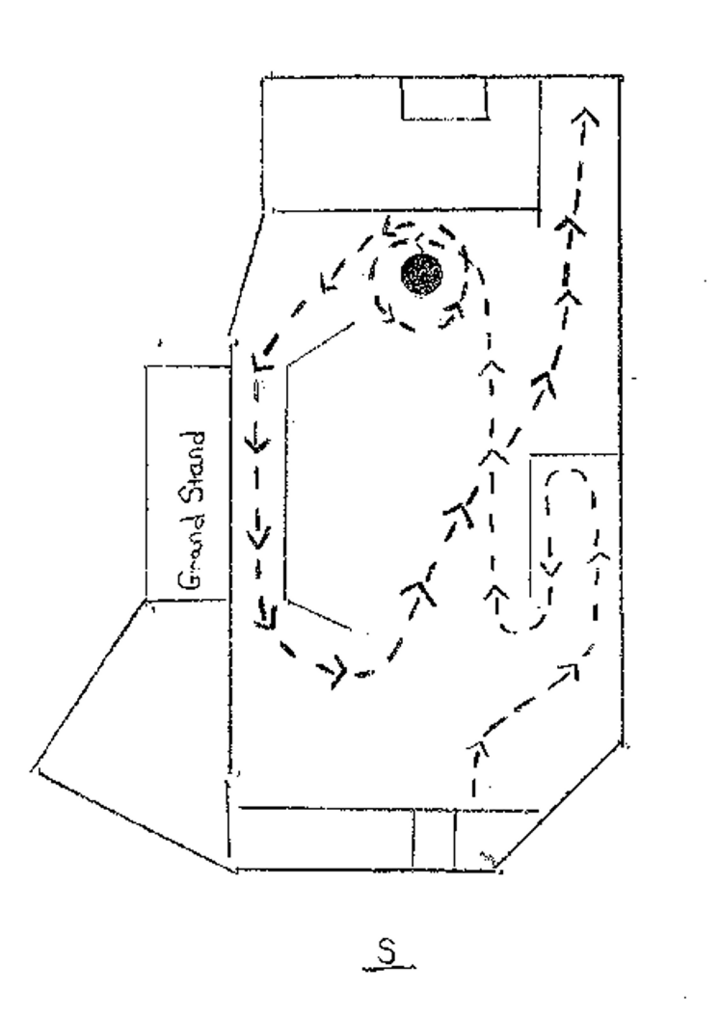
PATTERN - INTERMEDIATE
Time Limit: 3½ Minutes
1. Intermediate rider starts in the arena.
2. Judging and time start when the animal enters the arena.
3. Exhibitor is to drive calf into L-shaped pen and hold for 5 seconds.
4. Exhibitor then takes calf around barrel in a counterclockwise (to the left) direction.
5. Exhibitor then takes calf through alleyway in front of the grandstand, from north to south.
6. Exhibitor then takes calf back to the other end of arena and puts it through out gate. (Exhibitor MUST call for the gate).
7. Time is completed when tail of calf crosses gateway.
WORKING RANCH HORSE - JUNIOR CLASS & PATTERN
I402102 - Junior Division Working Ranch Horse - Age 10 and Under as of January 1 of the current year

PATTERN - JUNIOR
Time Limit: 3 Minutes
1. Junior rider starts in the arena.
2. Judging and time start when the animal enters the arena.
3. Exhibitor is to drive calf into L-shaped pen and hold for 5 seconds.
4. Exhibitor then takes calf around barrel in a counterclockwise (to the left) direction.
5. Exhibitor then takes calf back to the other end of arena and puts it through the gate. (Exhibitor MUST call for the gate).
6. Time is completed when tail of calf crosses gateway
DIVISION 403 - ROPING CLASSES
I403100 - Dummy Roping Class - Age 10 and under as of January 1 of the current year. (Horse Level II is NOT required for this class, because this class does not include live cattle).
DUMMY ROPING RULES
- Participants will rope the stationary dummy steer from horseback. Each participant will be allowed 5 throws at the head. There will be a 3-minute time limit on Dummy Roping.
- Participants roping the head must dally after each catch. This demonstrates the ability of the participant to dally correctly.
- Participants will be judged on the way they use their reins and legs, the handling of their horse, and proper position of their horse for the throw (up to 5 points possible).
- Participants will also be judged on the way they handle the rope - coiling, building the loop, swing, dally, etc. (up to 5 points possible).
Participants will receive points for the catches made on the dummy head according to the following system:
POINTS:
Miss - 0
Half-head - 1
Neck Catch - 2
Clean Horns - 3
There would be a total of 25 points possible - 10 from the judging and 15 from the catch values.
Breakaway
I403101 - Senior Division Breakaway Calf Roping
I403102 - Intermediate Division Breakaway Calf Roping
I403103 - Junior Division Breakaway Calf Roping
Tie Down
I403104 - Senior Division Tie Down Calf Roping
Team Roping
I403105 - Senior Division Team Roping - Heading
I403106 - Senior Division Team Roping - Heeling
I403107 - Intermediate Division Team Roping - Heading
I403108 - Intermediate Division Team Roping - Heeling
HORSE CLASSES
DIVISION 404 - WESTERN PLEASURE HORSE CLASSES
I404100 - Senior Division Western Pleasure
I404101 - Intermediate Division Western Pleasure
I404102 - Junior Division Western Pleasure
DIVISION 405 - WESTERN HORSEMANSHIP CLASSES
I405100 - Senior Division Western Horsemanship
I405101 - Intermediate Division Western Horsemanship
I405102 - Junior Division Western Horsemanship
DIVISION 406 - REINING HORSE CLASSES
I406100 - Senior Division Reining
I406101 - Intermediate Division Reining
I406102 - Junior Division Reining
DIVISION 407 - TRAIL CLASSES
I407100 - Senior Division Trail
I407101 - Intermediate Division Trail
I407102 - Junior Division Trail
DIVISION 408 - POLE BENDING CLASSES
I408100 - Senior Division Pole Bending
I408101 - Intermediate Division Pole Bending
I408102 - Junior Division Pole Bending
DIVISION 409 - BARREL RACING CLASSES
I409100 - Senior Division Barrel Racing
I409101 - Intermediate Division Barrel Racing
I409102 - Junior Division Barrel Racing
SHEEP
TIMES: Refer to Schedule in front of the Book to see SHOW TIME, CHECK IN TIME, and RELEASE TIME. Always check out with your animals Superintendent.
A. NUMBER OF EXHIBITS PER EXHIBITOR - 4-H/FFA members may show: 3 market lambs, 1 feeder lamb, and 3 breeding sheep. In addition, a 4-H exhibitor (12 years old and younger by Jan 1 of the year) may show 1 bottle lamb.
B. IDENTIFICATION - All breeding sheep and market sheep will need a USDA Scrapie Tag, or Tattoo, or 4-H/FFA tag to be exhibited at the Holt County Fair. All sheep must be identified on the appropriate ID affidavit form and turned into the Extension Office by June 15.
C. AGE REQUIREMENTS - All Market Lambs are required to be born on or after December 1, 2025.
D. WEIGHT- All feeder and market sheep will be weighed at the fair. Weigh-in weights are FINAL. Market lambs must weigh 100 lbs. or more to be eligible for market classes; class breaks will be determined by weight. Lambs weighing 99 lbs. or less will be shown in the feeder lamb class.
E. HEALTH REQUIREMENTS - Any Sheep that have active club lamb fungus or any infectious, contagious, and/or communicable disease will be removed immediately from the grounds by the owner and not be allowed to show.
F. GROOMING - All meat breed breeding sheep and all commercial breeding sheep SHOULD be slick shorn within 10 days of the show. All registered and commercial wool breed sheep may be shown in the fleece.
G. SHOWING AND HANDLING PRACTICES - The use of showing and/or handling practices that may be considered objectionable or abusive, such as striking or slapping lambs and exhibiting the lamb with its front feet off the ground are not acceptable. Refer to: ANIMAL MISTREATMENT/ABUSE in the LIVESTOCK/ANIMAL section of the fair book. (Lifting the lamb in a fluid motion to set the front legs prior to quickly setting the feet back on the ground is acceptable). Lambs may be braced but must have all four feet on the ground.
DIVISION 500 - SHEEP SHOWMANSHIP CLASSES
(Age - Prior to Jan. 1 of current year)
*MUST Sign up for Showmanship Classes
Refer to Livestock General Rules under Showmanship
I500100 - Senior Division Sheep Showmanship - Age 14 Years or Older
I500101 - Intermediate Division Sheep Showmanship- Age 11, 12, and 13
I500102 - Junior Division Sheep Showmanship - Age 10 Years or Younger
DIVISION 501 - FEEDER LAMB CLASS
I501100- Feeder Lambs (ewes & wethers) - under 100 lbs.
DIVISION 502 - MARKET LAMBS CLASS
- Ewes and Wethers will be shown together.
- Market Lambs will be divided into three divisions, light weight, medium weight, and heavy weight.
- Champion and Reserve Champion will be selected from each division.
The Grand Champion and Reserve Grand Champion Market Lamb will then be selected from the three division Champion and Reserve Champion lambs.
I502100 - Market Lambs (ewes & wethers) born on or after December 1, 2025 - 100 lbs. and over
I502101 - Market Lamb - Pen of 3
DIVISION 503 - BREEDING EWE CLASSES
I503100 - Ewe Lambs (Born 9/1 of previous year & after)
I503101 - Yearling Ewes (Born 9/1/2024 to 8/31/2025)
I503102 - Senior Ewes (2 years and older)
DIIVISION 504 - BREEDING RAM LAMB CLASS
I504100 - Breeding Ram Lambs (Born 9/1 of previous year & after)
DIVISION 505 - 4-H BOTTLE LAMB CLASSES
Bottle Lamb Record Books Must be turned in to the Extension Office by July 21.
*Record books turned in late will be dropped a ribbon placing!
PURPOSE: To design a sheep project to fit the physical size of the younger youth, to teach proper health care and nutritional requirements of young sheep, teach basic sheep management skills and to teach basic recordkeeping skills.
A. IDENTIFICATION - 4-H exhibitor may show 1 bottle lamb. ALL bottle lambs exhibited at the Holt County Fair will need a USDA Scrapie Tag, or Tattoo, or 4-H/FFA tag and identified on the appropriate ID affidavit form and turned into the Extension office by June 15.
B. BOTTLE LAMB - A bottle lamb is an orphan, or newborn lamb born after January 1 and before June 1 male or female; and fed on bucket or bottle. No nursing permitted.
C. TIME - Refer to Schedule in front of the Book to see when Bottle Lambs need to be In Place and for Release Time and when Interviews will be. Lambs will be presented to the public at the conclusion of the Sheep Show. All judging will have been done prior to that time.
D. JUDGING - Because this is a teaching project the quality and condition of the animal is only 15%. The bottle lamb project will be judged according to the following score card:
- Evaluation of a completed record 35%
- Evaluation of member's knowledge by interview 35%
- Health, quality, and condition of calf, and 15%
- Evidence of training and showing 15%
E. SHOWMANSHIP - Bottle Lambs are eligible for Sheep Showmanship.
I505100 - Senior Division Bottle Lamb (Exhibitors eligible for Senior Division: 4-H Age is 10, 11, or 12 prior to Jan. 1 of the current year. Exhibitors 4-H Age 13 and above prior to Jan. 1 of the current year are ineligible to show a bottle lamb).
I505101 - Junior Division Bottle Lamb (Exhibitors eligible for Junior Division: 4-H Age is 8 or 9 prior to Jan. 1 of the current year).
MEAT GOATS
TIMES: Refer to Schedule in front of the Book to see SHOW TIME, CHECK IN TIME, and RELEASE TIME. Always check out with your animals Superintendent.
A. NUMBER OF EXHIBITS PER EXHIBITOR - 4-H/FFA members may show: 3 market goats and 4 breeding goats. In addition, a 4-H exhibitor (12 years old and younger by Jan. 1 of the year) may show 1 bottle meat goat.
B. IDENTIFICATION- All meat goats exhibited at the Holt County Fair will need either a USDA Scrapie Tag, a Tattoo, OR a 4-H/FFA Tag. All goats must be identified on the appropriate ID affidavit form and turned into the Extension Office by June 15.
C. AGE REQUIREMENTS - All Market Goats are required to be born on or after December 1, 2025.
D. WEIGHT - All market Goats will be weighed at the fair. Market goats must weigh a minimum of 50 lbs. at check-in (with a recommendation of 70 - 100 lbs. being optimal). Goats under 50 lbs. will be allowed to check-in but will not be eligible for purple ribbons. Weigh in Weights are FINAL.
E. HEALTH REQUIREMENTS - Any goat that show signs of any infectious, contagious, and/or communicable disease will be removed immediately from the grounds by the owner and not be allowed to show.
F. GROOMING - Coats need to be clipped to have a nice clean appearance and even look.
G . NECK CHAINS & HALTERS - Goats are to be shown with either a halter, smooth neck chain, or smooth collar only. No PRONG Collars!
H. SHOWING AND HANDLING PRACTICES - The use of showing and/or handling practices that may be considered objectionable or abusive, such as striking or slapping goats and exhibiting the goat with its front feet off the ground are not acceptable. Refer to: ANIMAL MISTREATMENT/ABUSE in the LIVESTOCK/ANIMAL section of the fair book. (Lifting the goat in a fluid motion to set the front legs prior to quickly setting the feet back on the ground is acceptable). Goats may be braced but must have all four feet on the ground.
I. HORNS - Blunting, tipping, and dehorning is permitted.
DIVISION 600 - MEAT GOAT SHOWMANSHIP CLASSES
(Age - Prior to Jan. 1 of current year)
*MUST Sign up for Showmanship Classes
Refer to Livestock General Rules under Showmanship
I600100 - Senior Division Meat Goat Showmanship - Age 14 Years or Older
I600101- Intermediate Division Meat Goat Showmanship - Age 11, 12, and 13
I600102 - Junior Division Meat Goat Showmanship - Age 10 Years or Younger
DIVISION 601 - MEAT GOATS CLASSES
- Does and Wethers will be shown together. NO BILLIES!
- Short Scrotum, cryptorchid and buck kids are not eligible.
- Market Goats will be divided into three divisions, light weight, medium weight, and heavy weight.
I601100 - Market Meat Goats (doe & wethers) born on or after December 1, 2025
I601101 - Market Goat - Pen of 3
DIVISION 602 - BREEDING MEAT GOAT CLASSES
Age Date of Show
I602100 - Breeding Meat Buck - Born in current year
Breeding Meat Junior Does - Division I602…
Classes
…101 - 2 to under 6 months
…102 - 6 to under 9 months
…103 - 9 to under 12 months
Breeding Meat Yearling Does - Division I602…
Classes
…104 - 12 to under 16 months
…105 - 16 to under 20 months
…106 - 20 to under 24 months
Breeding Meat Senior Does - Division I602…
Classes
…107 - 24 to under 36 months
…108 - 36 to under 48 months
…109 - 48 months and over
DIVISION 603 - BOTTLE MEAT GOAT CLASSES
Bottle Meat Goat Record Books Must be
turned in to the Extension Office by July 21.
*Record books turned in late will be dropped a ribbon placing!
PURPOSE: To design a goat project to fit the physical size of the younger youth, to teach proper health care and nutritional requirements of young goats, teach basic goat management skills and to teach basic recordkeeping skills.
A. IDENTIFICATION - 4-H exhibitor may show 1 bottle meat goat. ALL bottle goats exhibited at the Holt County Fair will need either a USDA Scrapie Tag, a Tattoo OR a 4-H/FFA Tag and identified on the appropriate ID affidavit form and turned into the Extension office by June 15.
B. BOTTLE GOATS - A bottle goat is an orphan, or newborn goat born after January 1 and before June 1 male or female; and fed on bucket or bottle. No nursing permitted.
C. TIME - Refer to Schedule in front of the Book to see when Bottle goats need to be in Place and for the Time they will be Released. Refer to schedule to see when Interviews will be. Goats will be presented to the public at the conclusion of the Sheep Show. All judging will have been done prior to that time.
D. JUDGING - Because this is a teaching project the quality and condition of the animal is only 15%. The bottle goat project will be judged according to the following score card:
- Evaluation of a completed record 35%
- Evaluation of member's knowledge by interview 35%
- Health, quality and condition of calf, and 15%
- Evidence of training and showing 15%
E. SHOWMANSHIP - Exhibitors in Bottle Goats are eligible for Goat Showmanship.
I603100 - Senior Division Bottle Meat Goat (Exhibitors eligible for Senior Division: 4-H Age is 10, 11, or 12 prior to Jan. 1 of the current year. Exhibitors 4-H Age 13 and above prior to Jan. 1 of the current year are ineligible to show a bottle meat goat).
I603101 - Junior Division Bottle Meat Goat (Exhibitors eligible for Junior Division: 4-H Age is 8 or 9 prior to Jan. 1 of the current year).
SWINE
TIMES: Refer to Schedule in front of the Book to see SHOW TIME, CHECK IN TIME, and RELEASE TIME. Always check out with your animals Superintendent.
A. NUMBER OF EXHIBITS PER EXHIBITOR - 4-H/FFA exhibitors may show a total of 3 market hogs. A market hog may be either a gilt or barrow. No breeding swine will be exhibited.
B. IDENTIFICATION - All Swine must have a 4-H/FFA or EID Tag and identified on appropriate ID affidavit form and turned into the Extension Office by June 15.
C. WEIGHT - Minimum and Maximum Weights for Market Swine: Market hogs have a lower weight limit of 230 lbs. and upper weight limit of 320 lbs. to qualify for the regular show. All light and heavy hogs will be allowed to show but will not be eligible for purple ribbons or to compete for division awards. No weight allowances will be given. Suggested weight for market hogs is 220 to 300 pounds.
D. Market Swine will all be weighed at the fair and divided into classes based on total numbers and weight range. Weigh in Weights are FINAL.
E. HEALTH REQUIREMENTS - Any Swine that show signs of any infectious, contagious, and/or communicable disease will be removed immediately from the grounds by the owner and not be allowed to show. Under no circumstances may swine under quarantine be exhibited. Swine to be exhibited shall originate directly from a herd not under quarantine for pseudorabies AND
- A Stage IV or V county; or
- A pseudorabies qualified herd; or
- Be individually tested and classified negative for pseudorabies within 30 days prior to exhibition.
F. GROOMING- Hogs must be shown without oil, powder or any other coat dressing compounds considered objectionable. Hogs found in violation will be disqualified.
DIVISION 700 - SWINE SHOWMANSHIP CLASSES
(Age - Prior to Jan. 1 of current year)
*MUST Sign up for Showmanship Classes
Refer to Livestock General Rules under Showmanship
I700100 - Senior Division Swine Showmanship - Age 14 Years or Older
I700101 - Intermediate Division Swine Showmanship - Age 11, 12, and 13
I700102 - Junior Division Swine Showmanship - Age 10 Years or Younger
DIVISION 701 - MARKET SWINE CLASSES
I701100 - Market Gilt
I701101 - Market Barrow
I701102 - Market Swine - Pen of 3
POULTRY
***The word poultry as used in the below situations refers to all entries listed under the
Poultry Division includes Chickens, Ducks, Geese, Turkeys, Pigeons, and Exotic Birds.
TIMES: Refer to Schedule in front of the Book to see SHOW TIME, CHECK IN TIME, and RELEASE TIME. Always check out with your animals Superintendent.
A. IDENTIFICATION - All Poultry must be identifiedon the appropriate Small Animal ID affidavit form and turned into the Extension Office by June 15.
B. HEALTH REQUIREMENTS - ALL POULTRY MUST BE VET CHECKED AND PASS NO MORE THAN 2 WEEKS PRIOR TO FAIR TO BE ELIGIBLE TO SHOW! VET CHECK PAPERS ARE TO BE BROUGHT TO THE SHOW AND TURNED IN TO THE ANIMAL SUPERINTENDENT. Any Poultry that show signs of any parasites, infectious, contagious, and/or communicable disease will be removed immediately from the grounds by the owner and not be allowed to show.
DIVISION 900 - POULTRY SHOWMANSHIP CLASSES
(Age - Prior to Jan. 1 of current year)
*MUST Sign up for Showmanship Classes
Refer to Livestock General Rules under Showmanship
I900100 - Senior Division Poultry Showmanship - 14 Years or Older
I900101 - Intermediate Division Poultry Showmanship - 11, 12, and 13 Years of Age
I900102 - Junior Division Poultry Showmanship - 10 Years of Age or Younger
DIVISION 901 - POULTRY CLASSES
I901100 - Large Fowl (American, Asiatic, English, Mediterranean, Continental, All Other Standard Breeds)
I901101 - Bantam Chickens (Game Class, Single Comb Clean Legged, Rose Comb Clean Legged, All Other Comb Clean Legged, Feather Legged Class, Other Standard Breeds)
I901102 - Ducks (Heavy Weight, Medium Weight, Light Weight)
I901103 - Bantam Ducks
I901104 - Geese
I901105 - Turkeys
I901106 - Broilers Individual
I901107 - Broilers Pen of 3 (Male or Female Broilers - 6-9 Weeks of Age)
I901108 - Production Trio (3 Egg Producing Females)
I901109 - Breeding Trio (2 Females & 1 Male, All the Same Breed)
I901110 - Other Poultry (Peacocks, Pheasants, Pigeons, Etc.)
**Trio birds may not be shown as an individual entry.
A trio bird may be used in showmanship.**
DIVISION 902 - EGG CLASSES
The eggs will be judged on their exterior quality, uniformity of weight, size and shape, shell texture, shell color, and cleanliness of shell. Do not refrigerate eggs before judging. Please bring eggs in an egg carton to be displayed. 4-H’er may only exhibit ONE dozen of each egg color at the County Fair.
I902100 - White Eggs - 1 dozen
I902101 - Brown Eggs - 1 dozen
I902102 - Other Colored Eggs - 1 dozen
RABBITS
TIMES: Refer to Schedule in front of the Book to see SHOW TIME, CHECK IN TIME, and RELEASE TIME. Always check out with your animals Superintendent.
A. IDENTIFICATION: All rabbits must have a legible TATTOO and identified on the appropriate Ownership affidavit form and turned into the Extension Office by June 15. Tattoos must match the information found on the affidavit form. TATTOOS: ALL RABBITS HAVE PERMANENT ID NUMBERS OR NAMES TATTOOED IN THEIR EAR WITH A PIN TATTOO PLIERS AND TATTOO INK. (Permanent marker numbers written in the ears of the rabbits are NOT permanent ID numbers.) Rabbits whose tattoos are not readable or do not match the 4-H Affidavit will not be allowed to show. Tattoos that have faded or are no longer readable should be re-done prior to the Fair.
B. HEALTH REQUIREMENTS - ALL RABBITS MUST BE VET CHECKED AND PASS NO MORE THAN 2 WEEKS PRIOR TO FAIR TO BE ELIGIBLE TO SHOW! VET CHECK PAPERS ARE TO BE BROUGHT TO THE SHOW AND TURNED IN TO THE SUPERINTENDENT! Any Rabbit that shows signs of any parasites, infectious, contagious, and/or communicable disease will be removed immediately from the grounds by the owner and not be allowed to show.
DIVISION 920 - RABBIT SHOWMANSHIP CLASSES
(Age - Prior to Jan. 1 of current year)
*MUST Sign up for Showmanship Classes
Refer to Livestock General Rules under Showmanship
I920100 - Senior Division Rabbit Showmanship - Age 13 Years & Older
I920101- Junior Division Rabbit Showmanship - Age 12 Years or Younger
DIVISION 921 - FANCY BREED RABBIT CLASSES
Exhibitors may show any of the following breeds, provided rabbits have been tattooed and list on ID sheets - American Fuzzy Lop, American Sable, Belgian Hare, Blue Holicer, Britannia Petite, Czech Frosty, Dutch, Dwarf Hotot, Dwarf Papillion, English Angora, English Spot, Florida White, French Angora, Harlequin, Havana, Himalayan, Jersey Woollie, Lilac, Holland Lop, Mini Lop, Mini Rex, Mini Satin, Netherland Dwarf, Polish, Rex, Rhinelander, Satin Angora, Silver, Silver Marten, Standard Chinchilla, Tan, Thrianta, or Lionhead. Please refer to an American Rabbit Breeders Association (ARBA) standard to know what class your rabbit should be in.
Age Date of Show
Fancy breed rabbits will be divided into the following age divisions:
Junior - Six months old and younger.
Senior - Over six months old.
***Note: A Fancy Breed Rabbit that is exactly six months old on show day will be shown as a Junior Division rabbit. A Fancy Breed rabbit that is six months plus one day old on show day will be shown as a Senior Division Rabbit.
I921100 - Fancy Junior Doe (6 months old and younger)
I921102 - Fancy Senior Doe (Over six months old)
I921103 - Fancy Junior Buck (6 months old and younger)
I921105 - Fancy Senior Buck (Over six months old)
DIVISION 922 - COMMERCIAL BREED RABBIT CLASSES
Exhibitors may show any of the following breeds, provided rabbits have been tattooed and listed on ID sheets - American, American Chinchilla, Argente Brun, Beveren, Blanc de Hotot, Californian, Champagne, D’Argent, Checkered Giant, Cinnamon, Creme D’Argent, English Lop, Flemish Giant, French Lop, Giant Angora, Giant Chinchilla, New Zealand, Palomino, Satin, and Silver Fox. Please refer to an American Rabbit Breeders Association (ARBA) standard to know what class your rabbit should be in.
Age Date of Show
I922100 - Commercial Junior Doe (Under 6 Months)
I922101 - Commercial Intermediate Doe (6-8 Months)
I922102 - Commercial Senior Doe (8 Months and Over)
I922103 - Commercial Junior Buck (Under 6 Months)
I922104 - Commercial Intermediate Buck (6-8 Months)
I922105 - Commercial Senior Buck (8 Months and Over)
DIVISION 923 - PET RABBIT CLASSES
Age Date of Show
Pet breed rabbits will be divided into the following age divisions:
Junior - Six months old and younger.
Senior - Over six months old.
***Note: A Pet Breed Rabbit that is exactly six months old on show day will be shown as a Junior Division rabbit. A Pet Breed rabbit that is six months plus one day old on show day will be shown as a Senior Division Rabbit.
I923100 - Pet Junior Doe (6 months old and younger)
I923102 - Pet Senior Doe (8 Months and Over)
I923103 - Pet Junior Buck (6 months old and younger)
I923105 - Pet Senior Buck (Over six months old)
CATS
TIMES: Refer to Schedule in front of the Book to see SHOW TIME, CHECK IN TIME, and RELEASE TIME. Always check out with your animals Superintendent.
A. IDENTIFICATION - All Cats must be at least 4 months old and identified on Small Animal ID affidavit form with pictures and turned into the Extension Office by June 15.
B. HEALTH REQUIREMENTS - All Cats should be free of discharge from nose and eyes, fleas, ticks, ear mites, ringworms, any internal and external parasites, and infectious disease. Any Cat that shows signs of any parasites, infectious, contagious, and/or communicable disease will be removed immediately from the grounds by the owner and not be allowed to show.
C. VACCINATIONS - All cats are required to be current on their vaccinations for Rabies, distemper, panluekopenia, rhinotracheitis, calicivirus. Cats must either have a current feline leukemia vaccination or proof of a negative test within 180 of the day of the show. New vaccinations MUST be given at least two weeks prior to the date of the show. The Cat Vaccination Form must be filled out and signed by a veterinarian. If the cat is not declawed, the claws must be clipped.
VACCINATION RECORDS ARE TO BE BROUGHT TO THE SHOW
AND TURNED IN TO THE SUPERINTENDENT!
RULES AT FAIR:
- No expectant or nursing mother cats may be shown.
- All cats will be caged.
- While cats are at the county fair, it is the exhibitor’s responsibility to keep the area clean and to provide adequate care for their animals.
- Cats should have a collar/harness and leash on to keep the cat from running away.
DIVISION 940 - CAT SHOWMANSHIP
(Age - Prior to Jan. 1 of current year)
*MUST Sign up for Showmanship Classes
Refer to Livestock General Rules under Showmanship
I940100 - Senior Division Cat Showmanship - Age 14 years or Older
I940101 - Intermediate Division Cat Showmanship - 11, 12, and 13 Years of Age
I940102 - Junior Division Cat Showmanship - 10 Years of Age or Younger
DIVISION 941 - CAT CLASSES
Age Date of Show
I941100 - Best Long Hair Cat
I941101 - Best Short Hair Cat
I941102 - Best Long Hair Kitten (4 Months to 1 Year)
I941103 - Best Short Hair Kitten (4 Months to 1 Year)
DOG
TIMES - Refer to Schedule in front of the Book to see SHOW TIME, CHECK IN TIME, and RELEASE TIME. Always check out with your animals Superintendent.
Procedures described in the Nebraska 4-H Dog Show Rules 4H421 published by Nebraska Extension will be followed in the Holt County Fair Dog Show.
A. IDENTIFICATION - All Dogs must be identified on Small Animal ID affidavit form with pictures and turned into the Extension Office by June 15.
B. NUMBER OF ENTRIES - An exhibitor may enter one showmanship class, two agility classes (using different dogs and in different level of classes), two obedience classes (using different dogs and in different level of classes), and two rally classes (using different dogs and in different level of classes). If a youth member has two dogs reach the highest-class level in Obedience, Rally, or Agility, they may show both dogs in the highest-class level.
C. HEALTH REQUIREMENTS - Any Dog that shows signs of any parasites, infectious, contagious, and/or communicable disease will be removed immediately from the grounds by the owner and not be allowed to show.
D. VACCINATIONS - VACCINATION RECORDS ARE TO BE BROUGHT TO THESHOW AND TURNED IN TO THE SUPERINTENDENT! All dogs are required to be current on their vaccinations for Rabies, Distemper, Hepatitis and Parvovirus. The Dog Vaccination Form must be filled out and signed by a veterinarian. NEW vaccinations MUST be given at least two weeks prior to the date of the show.
E. DISQUALIFIED DOGS - Females in season will not be permitted to be shown. Overly aggressive dogs may be disqualified at the discretion of the judge or superintendent. Lame or crippled dogs will not be permitted to show if it is determined by a show superintendent that it is affecting the health of the dog. All substitutions of dogs must be made prior to the start of the show. Dogs may be substituted only if the change does not affect the class pre-entered.
F. BAITING - Baiting with food or a toy is not permitted and is cause for disqualification. Handlers may use baiting action without food or toys in showmanship. The judge or superintendent has the authority to disqualify violators.
G. AGE OF DOG - A dog that is exhibited at the Dog Show must be 6 months or older. Agility dogs must be 18 months or older to participate in competition.
H. EXHIBITOR RESPONSIBILITY - All clean-up and disposal shall be the exhibitor’s responsibility. Dogs soiling in the show ring (during a class) is up to the judge to lower a ribbon placing or to disqualify.
I. GROOMING AND WORKING - Only exhibitors are allowed to groom or work dogs at the show, both in and out of the ring.
J. ADVANCEMENT LEVELS IN OBEDIENCE CLASSES - The following definitions and rules apply to advancement in obedience classes:
A youth will move up to a ‘transition year,’ after they receive 2 purples in a specific class at county or state level competition. Youth will finish their 4-H year at the same level if the second purple ribbon occurs in the middle of their 4-H year. Youth do not have to move up in the middle of a 4-H year. Youth will then have the option to stay in their current class for one additional year (after receiving 2 purple ribbons) called the ‘transition year’. During the transition year, youth will practice the more advanced class (gaining skills such as off leash work) but may compete in their same level. Youth may advance up to the next level more quickly with advice/assistance from a leader and parent to help evaluate skill and readiness of youth and dog. This may especially occur if the youth has had previous dog handling experiences.
K. SUBSTITUTIONS - A dog may be substituted for showmanship classes only if it is injured or dies following the entry deadline. No-substitutions may be made in obedience and agility classes. A substitute can be selected from exhibitor’s household family or from the household where the originally entered dog resides. Dog(s) may be substituted only if a superintendent is directly consulted prior to the show date. Substitute dogs must be vet checked and vaccination records completed. Both forms need to be brought to the show and turned in.
DIVISION 960 - DOG SHOWMANSHIP
(Age - Prior to Jan. 1 of current year)
*MUST Sign up for Showmanship Classes
Refer to Livestock General Rules under Showmanship
Each class will be judged on handler’s appearance (10%), grooming and conditioning of dog (20%), coordination of the dog and handler (50%), and general knowledge (20%).
I960100 - Senior Division Dog Showmanship - 14 Years or Older
I960101 - Intermediate Division Dog Showmanship - 11, 12, and 13 Years
I960102 - Junior Division Dog Showmanship - 10 Years of Age or Younger
DIVISION 961 - DOG OBEDIENCE CLASSES
Follow rules in Nebraska 4-H Dog Show Rules 4H421 to determine class entry and exercises within each obedience class.
BEGINNING NOVICE: All exercises must be performed on a six-foot leash. Dogs must heel including figure 8; stand for examination; come on recall; long sit for one minute and long down for three minutes. During the sit and down exercise, the leash must be held by the handler.
I961100 - Beginning Novice Division A - exhibitor and the dog being shown are both in their first year of county, state 4-H, or any other dog show experience.
I961101 - Beginning Novice Division B - exhibitor or dog is beyond first year of competition.
I961102 - Beginning Novice Division C - exhibitor and dog is beyond first year of competition.
NOVICE A & B: Dogs must heel on leash including figure 8; stand for examination off leash, heel free, come on recall off leash, long sit for one minute off leash and long down for three minutes off leash with handler across the ring.
I961103 - Novice Division A - Exhibitor and dog have received a purple in Beginning Novice and are in first year of Novice Class competition.
I961104 - Novice Division B - Exhibitor and dog are beyond first year of Novice Class competition.
DIVISION 962 - DOG AGILITY CLASSES
PROCEDURE - Agility will follow the procedures and classes described in Nebraska 4-H Dog Show Rules 4H421. If a youth has not had training or practiced on agility equipment, they may not enter a competition due to safety and training experience in agility. Wither heights of all agility dogs must be included with advanced entries.
Level 1 & 2 Agility classes are run on leash. Level 3, 4, and 5 are all run off leash. One of each obstacle noted in each level are mandatory and duplicate obstacles may be added to make up quantities of obstacles in each level. Obstacle equipment needing repair or deemed unsafe by judge will be excluded from the competition. Judges determine the arrangements of the obstacles on the course. Obstacles in course should be numbered to note the obstacle order for the course. Course maps will be made available and posted at time of show registration in designated area(s).
Agility Jump heights – measure dogs at withers to determine jump height:
- Dogs 11 inches or less – 4 inches,
- Dogs over 11 inches up to and including 14 inches – 8 inches,
- Dogs over 14 inches up to and including 18 inches – 12 inches,
- Dogs over 18 inches – 16 inches.
I962100 - LEVEL 1 - 6 obstacles - 3 bar jumps which have two bars each, short dog walk, pause box or table, and tunnel (open)
I962101 - LEVEL 2 - 10 obstacles - several bar jumps which have two bars each, short dog walk, pause box or table, tunnel (open), chute (collapsed or closed tunnel), solid panel jump and tire jump (hoop jump)
I962102 - LEVEL 3 - 10 obstacles - same obstacles as Level 2 but dogs run off leash for Level 3.
DIVISION 963 - DOG RALLY CLASSES
PROCEDURE - Rally will follow the procedures and classes described in Nebraska 4-H Dog Show Rules 4H421. Rally obedience is a dog sport based in obedience. Many of the Rally exercises are the same or have the same parts (elements) of traditional obedience. Rally obedience is a dog performance class that uses directional signs that are numbered to indicate the course the handler is to follow during the performance. The dog and handler heel from sign to sign and perform the exercises indicated by the numbered sign at each location. At the start sign, the judge gives permission to start the course, and then the dog and handler go through the course. The judge will say "Are you ready?" followed by "Forward". No other directives are given. The course consists of signs that instruct the team what to do. Unlike traditional obedience, handlers are allowed to encourage their dogs during the course.
Any dog and/or exhibitor that has not shown in Rally before, should start in Beginning Rally and advance based on the two purple rule. The exhibitor may choose to start at a higher level but cannot go back once they have exhibited in that level.
I963100 - Beginning Rally - Both dog and exhibitor are in their first year of competition. Dog is on leash and there are 5-10 stations.
I963101 - Rally 1 - Exhibitor and/or dog are beyond their first year of competition. Dog is on leash and there are 10-15 stations.
I963102 - Rally 2 - Exhibitor and dog have received a purple in Rally 1. Dog is off leash and there are 12-17 stations.
I963103 - Rally 3 - Exhibitor and dog have received a purple in Rally 2. Dog is off leash and there are 15-20 stations.
OTHER SMALL ANIMALS
TIMES - Refer to Schedule in front of the Book to see SHOW TIME, CHECK IN TIME, and RELEASE TIME. Always check out with your animals Superintendent.
Animals eligible for the show are gerbils, hamsters, guinea pigs, ferret, chinchilla, hedgehog, caged birds, turtles, amphibians, tropical fish, goldfish, and other animals that cannot be exhibited in other classes.
A. IDENTIFICATION - All Small Animals must be identified on Small Animal ID affidavit form with pictures and turned into the Extension Office by June 15.
B. HEALTH REQUIREMENTS - All small animals should be free of fleas, ticks, mites, lice, and other parasites when they come to the fair. Small animals will NOT BE required to have vet checks because small animals are confined in their own cage/environment and do not have direct contact with other animals. All small animals should be kept in their cage/environment at all times except during the small animal show.
RULES AT FAIR:
1. An exhibit is composed of the animal(s) and the cage or tank (furnished by the exhibitor). The exhibit will be judged as a whole; both animal(s) and the facility in which they are displayed will be considered.
2. The exhibit can contain from one to five animals. No animal with nursing babies will be considered.
3. Judging will be based on observation of exhibit and interview with exhibitor. The following criteria will be considered:
- Health of animal
- Condition of containment facility
- Safety of display
- Appropriate environment
- Proper food and water facilities
- Visual aids describing the display are preferred for top ribbon placing.
- Exhibitors are required to be present during the judging of their exhibits.
4. Exhibitors are responsible to clean up their own exhibit.
DIVISION 980 - SMALL ANIMALS CLASSES
I980100 - Small Mammals
I980101 - Birds
I980102 - Fish
I980103 - Reptiles and Amphibians
I980104 - Other