What is the difference between jam and jelly? Marmalade and preserves? All of these fruit spreads have four basic ingredients: fruit, sugar, acid and pectin. The method of preparing and cooking the ingredients is what makes the difference.
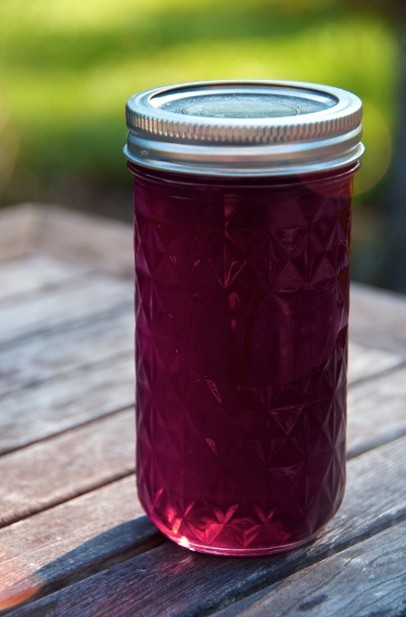
Jelly uses strained juice from fresh fruit. The end product has a clear, shimmering appearance. It holds its shape when removed from the jar yet spreads easily.
Jam requires crushed or chopped fruit. Jam is cooked until it rounds up in a spoon. Jam should be slightly firm. It will not retain its shape. Jam is less firm than jelly. Thickness results from cooking the excess liquid out. Prepare jam in small batches and cook rapidly.
Preserves contain whole fruit or large pieces of fruit suspended in thick syrup. The fruit retains its shape. Use a pan with a wide opening and work in small batches.
Marmalades are jellies with pieces of fruit, pulp and peel suspended throughout. When preparing the fruit, leave some of the white pith that is next to the peel. The white pith is high in pectin, which makes the jelly “jel”. Marmalades are cooked rapidly until close to the jellying point.
Conserves are jam-like mixtures of two fruits. Prepare them in small batches and cook rapidly after the sugar has dissolved.
Fruit batters are smooth, thick spreads created by cooking fruit pulp and sugar slowly to the desired consistency. Spices are often added to complement fruit flavors.
Regardless of the type of fruit spread you prepare, use a test recipe, and do not adjust the proportions of ingredients. You may end up with a unique product. And remember, according to the USDA, fruit spreads must be processed in a boiling water bath. The use of paraffin is NOT recommended.