
Nebraska Extension Educator - Holt & Boyd Counties - LaDonna Werth
Nebraska Extension Educator - Holt & Boyd Counties - Amy Timmerman
Nebraska Extension Educator - Holt, Boyd, Garfield, Loup, & Wheeler Counties - Bethany Johnston
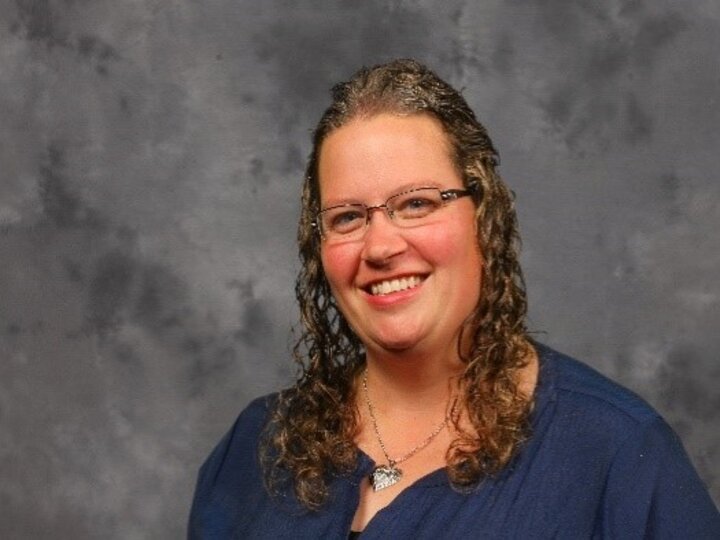
Nebraska Extension Educator - Brown, Rock, & Keya Paha Counties - Brittany Spieker
Nebraska 4-H Assistant - Holt & Boyd Counties - Debra Walnofer
January 19: Beef Production & Private Pesticide Applicator Update, 10:00am-2:00pm, Southeast Meeting Room Auditorium, Stuart, NE
January 19: Online Calving College, 7:30pm-8:45pm, Register for Calving College by Jan. 12, More info at Calving College Series
January 21: Prescribed Fire Workshop, 9am-3pm, Ericson Fire Hall, Ericson, NE
January 24: Nebraska State 4-H Indoor Archery Championships, Sheep Barn, Fonner Park, Grand Island, Registration for Indoor Archery Championships, Contact Info: Becky Carmin: bowmins@gmail.com
January 26: Online Calving College, 7:30pm-8:45pm, Register for Calving College by Jan. 12, More info at Calving College Series
January 27-28: What Did It Cost to Produce: Farm and Ranch Unit Cost of Production, 9:00am-4:00pm, Burwell Legion Hall, Burwell, NE, Pre-register one week in advance by calling Holt County Extension at 402-336-2760 or email Bethany Johnston at bjohnston3@unl.edu
February 1: DUE: Holt County 4-H Council High School Senior Scholarship Applications
February 2: Online Calving College, 7:30pm-8:45pm, Register for Calving College by Jan. 12, More info at Calving College Series
February 3: DUE: 4-H Special Garden Project, Form to Order Special Garden Seeds
February 9: In-Person Calving College, 7:30pm-8:45pm, Valentine, NE, Register for Calving College by Jan. 12, More info at Calving College Series
February 11: In-Person Calving College, 7:30pm-8:45pm, Valentine, NE, Register for Calving College by Jan. 12, More info at Calving College Series
How To Help Children Understand Time
Adults spend a lot of time thinking about time — yesterday, today, tomorrow, hours and minutes are all part of an adult’s life. Young children, however, are concrete thinkers and don’t understand the concept of time and what it means. Children learn best when they can touch, feel or see something, so time can be confusing for them. A child’s readiness for learning about time is based on the stages of brain development. The process is slow and may take years, but children begin to understand the concept around age 11.
Young children and elementary school-age children learn best by thinking about real things and linking what they learn to their own real-life experiences. Parents can help children learn about time by incorporating a regular routine. Children feel more secure with a routine because they have the experience and begin to learn about the passage of time.
Giving children an advance warning about changes in routines can help minimize frustration, problems and confusion, and build more cooperation and flexibility. If children are asked to stop playing and get ready for bed, they may not want to because they’re having fun. If they’re given a five-minute warning, children learn that a change is coming. Although they don’t know the meaning of five minutes, they begin to understand that they need to finish playing and get ready for bed. Children are more likely to be receptive to a change if they know what will happen next. Let children know of any changes before they are going to happen.
Setting aside time to talk to children about how they use their time is also important. Having family conversations at the dinner
LaDonna Werth
Extension Educator
Phone: 402-336-2760
E-mail: lwerth2@unl.edu

table gives parents a chance find out what their children did during the day. This also provides an opportunity to teach children new words like before, after, yesterday, today, tomorrow, day and night.
Source:
Nina Chen, Ph.D., CFLE, human development specialist, Jackson County, University of Missouri Extension and Beneke, S., Ostrosky, M., & Katz, L. 2008. Calendar time for young children: Good intentions gone awry. Young Children, 12-16. (2018)
African Violets Bring Winter Color Indoors with Proper Care
African violets (Saintpaulia) have long been favorites among indoor gardeners for their velvety leaves and vivid blooms while many outdoor landscapes are dormant. When properly cared for, these plants can bring vibrant color to homes during the winter months.
Native to the Usambara Mountains of Tanzania, African violets were discovered in the late 1800s and quickly gained worldwide popularity. Today, hundreds of hybrid varieties are purple African violet plant indoors available in a range of flower and leaf colors, shapes and sizes.
“It’s fascinating to think that a plant from a remote African forest is now one of the most common houseplants,” said Aaron Steil, consumer horticulture extension specialist at Iowa State University. “African violets are most rewarding when their basic needs are met.”
Bright light and household temperature
African violets thrive in bright, indirect light. The light should be bright enough to cast a shadow, but avoid placing the plant in direct sunlight, as this can scorch its leaves. In many homes, a north- or east-facing window works well. The plants can also grow easily under fluorescent or LED grow lights.
Amy Timmerman
Extension Educator
Phone: 402-336-2760
E-mail: atimmerman2@unl.edu
Typical household temperatures are ideal. Maintain temperatures between 60 F and 80 F, avoiding any sudden temperature changes from cold drafts or heat sources.
Water carefully and fertilize
Proper watering is essential for African violets. African violets prefer evenly moist soil; be careful not to overwater. When watering from above, avoid getting water on the foliage, as this can cause leaf spotting. To avoid this issue, bottom watering is an effective method. Place the pot in a shallow dish for 20 to 30 minutes, allowing the soil to absorb moisture.
“One of the biggest mistakes people make is overwatering,” Steil noted. “Let the soil dry slightly before watering again, and be sure the soil is a lightweight, well-draining potting mix that is organic, but doesn’t hold too much moisture.”
African violets should be fertilized regularly, but not excessively. Use fertilizer labeled for African violets or dilute an all-purpose fertilizer to one-half or one-quarter strength.
“When you get the light, watering and fertilizer just right, African violets can bloom almost continuously, making them one of the few houseplants that provide color year-round,” Steil added.
Common problems and solutions
Yellowing leaves that droop and become mushy are often the result of excessive watering or poor drainage, which leads to root rot. Proper watering is the best defense against root rot.
A lack of blooms can be caused by inadequate light or improper fertilization. “African violets need regular fertilization, but too much leads to vigorous vegetative growth and poor flowering,” explains Steil.
Pests such as spider mites or mealybugs require prompt treatment. Steil advises home gardeners to inspect plants regularly. “If you see pests, thoroughly rinse with room temperature water, isolate the plant and treat with an insecticidal soap,” he added.
Easy to propagate and rejuvenate
African violets can be easily propagated from leaf cuttings, making them great for sharing. Remove a healthy leaf with about an inch of stem, insert it into moist perlite or a very well-drained potting mix and cover it with a clear dome or plastic bag to maintain humidity. New roots usually form in three to four weeks, followed by young plants a couple of weeks later. Once the new plants are several inches tall, separate them and pot them individually.
As plants age, repotting can help them maintain their appearance and health. “If more than one rosette of leaves develops, carefully divide the crowns and replant in fresh potting soil,” Steil said. “For plants with a neck, repot deeply, burying the stem up to the lowest leaves,” Steil said.
Source: Aaron J. Steil – Iowa State University Extension Educator (Iowa State University Yard and Garden – January 9, 2026)
Nightshade in Corn Residue- Grazing Could Be Toxic
Have you noticed any black nightshade in your corn stalks that you are grazing or plan to graze? If these fields have too much black nightshade, be careful — it might be toxic.
Black nightshade is common in many corn fields in the fall, especially those that had hail damage in the summer or any situation where the corn canopy became thin or open. It usually isn’t a problem, but if the density of nightshade is very high, there is the potential that it could poison livestock. Almost all livestock, including cattle, sheep, swine, horses and poultry are susceptible.
Black nightshade plants average about two feet in height and have simple alternating leaves. In the fall, berries are green and become black as the plant matures. All plant parts contain some of the toxin and the concentration increases as plants mature, except in the berries. Freezing temperatures will not reduce the toxicity.
It is very difficult to determine exactly how much black nightshade is risky. Guidelines say that a cow would need to consume three to four pounds of fresh black nightshade to be at risk of being poisoned. These guidelines, though, are considered conservative since there is little data on the actual toxicity of nightshade plants. Reports of nightshade poisoning have been very scarce in the past, which is also encouraging.
Bethany Johnston
Extension Educator
Phone: 402-336-2760
E-mail: bjohnston3@unl.edu

Fortunately, even though nightshade plants remain green fairly late into the fall, cattle usually don’t appear to seek out nightshade plants to graze. However, green plants of nightshade might become tempting toward the end of a field’s grazing period when there is less grain, husks or leaves to consume.
Common sense and good observation must be your guide. Scouting fields to estimate the general density of nightshade plants will help you determine any potential risk. Secondly, and particularly near the end of a field’s grazing period, closely observe what the cattle are eating to see if animals might be selecting nightshade plants.
Source: Jerry Volesky - Extension Range and Forage Specialist (Originally published October 18, 2021 in CropWatch; UNL Beef – Updated December 1, 2025)
NEWS RELEASE
Unit Cost of Production Workshops
The Nebraska Extension will host Unit Cost of Production workshops in central Nebraska in December and January to provide hands-on learning experiences for producers in calculating the unit cost of production for a cow-calf operation.
Workshops will be held at two locations. Both days will run from 9am-4:00pm CT.
- The first workshop will be held on Dec. 8 and 9 at Community Center (small room) in Atkinson.
- The second workshop will be on Jan. 27 and 28 at the Legion Hall in Burwell.
Pre-register one week in advance. Call the Nebraska Extension office in Holt County at 402-336-2760 or email Bethany Johnston at bjohnston3@unl.edu.
Each location is limited to 25 people. The cost is $50 per participant and includes meals and materials for both days. Contact Aaron Berger at 308-235-3122 with questions about the workshops.
“Having information to make effective business decisions is important for ranch success. Enterprise analysis and unit cost of production (UCOP) are tools that can help ranchers identify where value is being created on the ranch, where costs are occurring, and what changes could be made to improve profit,” Berger said.
While it takes time to set up and calculate a UCOP, the benefits are:
- Knowing what present costs are.
- Projecting what unit cost of production will be in 2026.
- Identifying opportunities to improve profitability.
- Using information to make management and marketing decisions.
Participants in this workshop will work through a sample ranch to determine the economic profitability of four common ranch enterprises: cow-calf, stockers/breeding heifers, hay, and land. They will go through the steps of analyzing costs and calculating what it costs to produce a unit of product for each enterprise. Participants will also learn how to identify how changes could improve ranch profitability.
Again, pre-register one week in advance for both locations. Call the Nebraska Extension office in Holt County at 402-336-2760 or email Bethany Johnston at bjohnston3@unl.edu.
NEWS RELEASE
Calving College 2026
Following an overwhelmingly positive response last year, Nebraska Extension is pleased to bring back the Calving College series for 2026. The three-part webinar, Fundamental Knowledge for Successful Calving Season, will take place January 19, January 26, and February 2, 2026, from 7:30-8:45pm CT, and will be complemented by hands-on, in-person workshops held across four locations February 9-12, 2026. This program offers practical, research-based guidance for farmers, ranchers, and veterinary professionals working to ensure a successful calving season.
Webinar Series Topics:
- January 19, 2026 - Understanding Normal. Discussion includes stages of labor, what happens to the cow and calf during delivery, recognizing and knowing how to manage abnormal, when and how to assist delivery,
- January 26, 2026 - First 24 hours: post-calving care for cows and calves. Reviewing normal vitals for the cow and neonatal calf and recognizing and managing complications in the first hours of life, including the importance of colostrum management, and calf resuscitation techniques.
- February 2, 2026 - 48 Hours and Beyond: Keeping cow and calf healthy and thriving. Topics include nutritional requirements, common health concerns in calves, managing environmental stress in the first 2 months of life, and how to manage orphan calves.
- February 9, 2026 - Cherry County Extension, Valentine, NE. 6:00pm CST
Each webinar will be co-led by Dr. Becky Funk, DVM, Animal Health Teaching and NE Extension Specialist and Dr. Lindsay Waechter-Mead, DVM, NE Extension Livestock Educator, allowing participants to engage and ask questions in real-time.
New This Year! Participants will be eligible for BQA continuing education credits.
In-Person Workshop: The series will culminate in a hands-on workshop offered February 9-12, 2026, where participants can practice their skills using a life-sized cow and calf model. This unique opportunity will provide practical experience in a supportive environment, ensuring participants leave with confidence and competence.
Details of the Series:
- Webinar Dates: January 19, 26, February 2, 2026
- Time: 7:30-8:45pm CST
- Location: Online (link provided upon registration)
- In-Person Workshop opportunities:
- February 10, 2026 - Tripp County 4-H Center, 815 W 12th St Winner, SD 6:00pm CST
- February 11, 2026 - West Holt FFA Shop, 1000 N. Main St. Atkinson, NE 6:00pm CST
- February 12, 2026 - Northeast Community College, 801 E. Benjamin Ave. Norfolk, NE 6:00pm CST
- Registration Fee: $80 for 3-part webinar series plus one in-person workshop
- Calving College Online Registration
- Webinar participants will receive a notebook of Nebraska Extension resources and access to the recorded webinars to view at your convenience. Participants are asked to register by January 12, 2026, to ensure resources are received before the series begins. A computer and internet connection will be needed to participate in the webinar series.
For more information about the Calving College webinar series and workshop, please contact Dr. Lindsay Waechter-Mead at 402-746-3417 or lindsay.waechter-mead@unl.edu
NEWS RELEASE
Nebraska Extension Launches Six-Part Webinar Series on Controlling Invasive Weeds and Pests in Pastures
Nebraska Extension will offer a six-part webinar series in February 2026 designed to equip ranchers, landowners, and natural resource professionals with the latest research and management strategies for tackling invasive weeds, woody encroachment, and pasture pests.
“Controlling Invasive Weeds & Pests in Pastures” will be held over three weeks, with webinars taking place on Mondays and Thursdays - Feb. 9, 12, 16, 19, 23 and 26 - from 6:30 to 7:45 p.m. MT (7:30 to 8:45 p.m. CT).
The series brings together Nebraska Extension specialists and the Nebraska Department of Agriculture to address several of the most pressing challenges in pasture and rangeland management.
Topics & Speakers include:
- Understanding regulations regarding pesticide application in pastures and noxious weed laws in Nebraska - Nebraska Department of Agriculture.
- Learn common invasive broadleaf weeds, herbicide options and the critical aspect of timing for control. Dr. Nevin Lawrence will discuss research results and how these apply to land managers.
- Woody encroachment on pastures is clear to see. Presenters Ben Beckman and Bethany Johnston will cover when control methods work best on cedars and troublesome shrubs.
- Invasive winter annuals like cheatgrass can wreck native range. Dr. Mitch Stephenson will discuss recent research in the Panhandle that is providing data on the effectiveness of herbicide options.
- What is that? New weeds to watch for will be the topic Gary Stone discusses early detection, and rapid response is key to control problem plants.
- Grasshopper populations can cause significant forage losses on pastures. Dave Boxler will discuss when treatment is warranted and restrictions for insecticide applications.
Registration is $75 per person and includes a mailed packet of key reference materials: the 2025 UNL Guide to Weed Management, Weeds of the Great Plains, and a booklet of NebGuides and Extension Circulars focused on invasive species. Webinars will be recorded.
Registration closes Jan. 26 to ensure participants receive their materials before the first webinar.
Those interested may register at Pasture Pests Registration.
For more information, contact your local Nebraska Extension office or visit Nebraska Extension.
NEWS RELEASE
“Calving College” Coming to Atkinson on Feb. 11
Following an overwhelmingly positive response last year, Nebraska Extension is pleased to bring back the “Calving College” series for 2026. This program offers practical, research-based guidance for farmers, ranchers, and veterinary professionals working to ensure a successful calving season.
Local ranchers can join two ways. The first way is to sign up for 3 webinars that includes the hands-on workshop (cost is $80, sign up online). The second option is to only attend the hands-on workshop in Atkinson on Feb. 11 (cost is $20 at the door).
The hands-on, in-person workshop will be held at the West Holt FFA Ag Room, 1000 N. Main St in Atkinson, starting at 6 pm CT on February 11. Led by veterinarians, Dr. Becky Funk and Dr. Lindsay Waechter-Mead, participants can practice their skills using a life-sized cow and calf model. Participants can “see” inside the model cow, as the vets can place the calf with a leg back, backwards, etc, giving tips as participants pull the calf. This unique opportunity will provide practical experience in a supportive environment, ensuring participants leave with confidence and competence. If producers decide to only attend this workshop in Atkinson, walk-ins are welcome, and you will be charged $20 at the door.
Webinar participants will receive a notebook of Nebraska Extension resources and access to the recorded webinars to view at your convenience. A computer and internet connection will be needed to participate in the webinar series. The calving webinars will take place January 19, January 26, and February 2, 2026, from 7:30–8:45 p.m. CT, and will be complemented by hands-on, in-person workshops. For $80, you can attend the webinars and a hands-on workshop.
For more information about the Calving College webinar series and workshop, please contact Dr. Lindsay Waechter-Mead at 308-633-0158 or lindsay.waechter-mead@unl.edu, or sign up for the Calving College Webinars Online.